La chirurgie du rachis est un enjeu crucial pour les patients souffrant de douleurs chroniques, notamment au Québec où les délais d'attente sont longs. De plus en plus de patients se tournent vers la France pour bénéficier de techniques chirurgicales innovantes telles que la chirurgie simple, la fusion vertébrale et la chirurgie motion. Ces approches, combinées à un suivi médical rigoureux, visent à améliorer la qualité de vie et la mobilité des patients, tout en intégrant des traitements conservateurs comme la décompression neurovertébrale.
Top 5 Tips to Remember
La chirurgie du rachis inclut des techniques variées adaptées aux besoins des patients.
La France offre des solutions chirurgicales innovantes, notamment la chirurgie motion.
Un traitement conservateur est essentiel avant d'envisager une chirurgie.
La collaboration entre équipes québécoises et françaises optimise le parcours patient.
Le suivi post-opératoire est crucial pour garantir des résultats à long terme.
Today, spinal surgery represents a major challenge for many patients suffering from chronic pain or mobility problems. In Quebec, waiting times and high costs in the private sector are driving more and more patients to explore solutions elsewhere, notably in France. This country stands out for its innovative medical offering, where simple surgical techniques, spinal fusion and motion surgery with dynamic implants coexist to best meet specific needs. The transatlantic route is thus an attractive alternative, combining expertise, technological innovation and personalized support. On this international stage, patients benefit not only from rigorous medical care, supervised by experts such as the Dr. Sylvain Desforges, We also offer a comprehensive follow-up service incorporating the latest advances in joint mobility, rehabilitation and pain reduction.
This collaboration between Quebec and French teams is based on exemplary coordination, guaranteeing seamless treatment from initial assessment to post-operative recovery. Innovations such as TOPS or IntraSPINE, These innovative techniques are revolutionizing the way spinal surgery is conceived, placing quality of life and mobility at the heart of our concerns. These innovative techniques are revolutionizing the way in which spinal surgery is conceived, placing quality of life and mobility at the heart of concerns, and inviting patients to better understand their course and become fully involved. This context highlights the central role of conservative treatments, in particular neurovertebral decompression TAGMED Clinique, which must precede any surgical option. Thus, with scientific rigor and humanity, simple surgery, spinal fusion and motion surgery are establishing themselves as reliable and personalized solutions, for optimized clinical results and a promising future.
The main categories of back surgery: simple, spinal fusion and motion
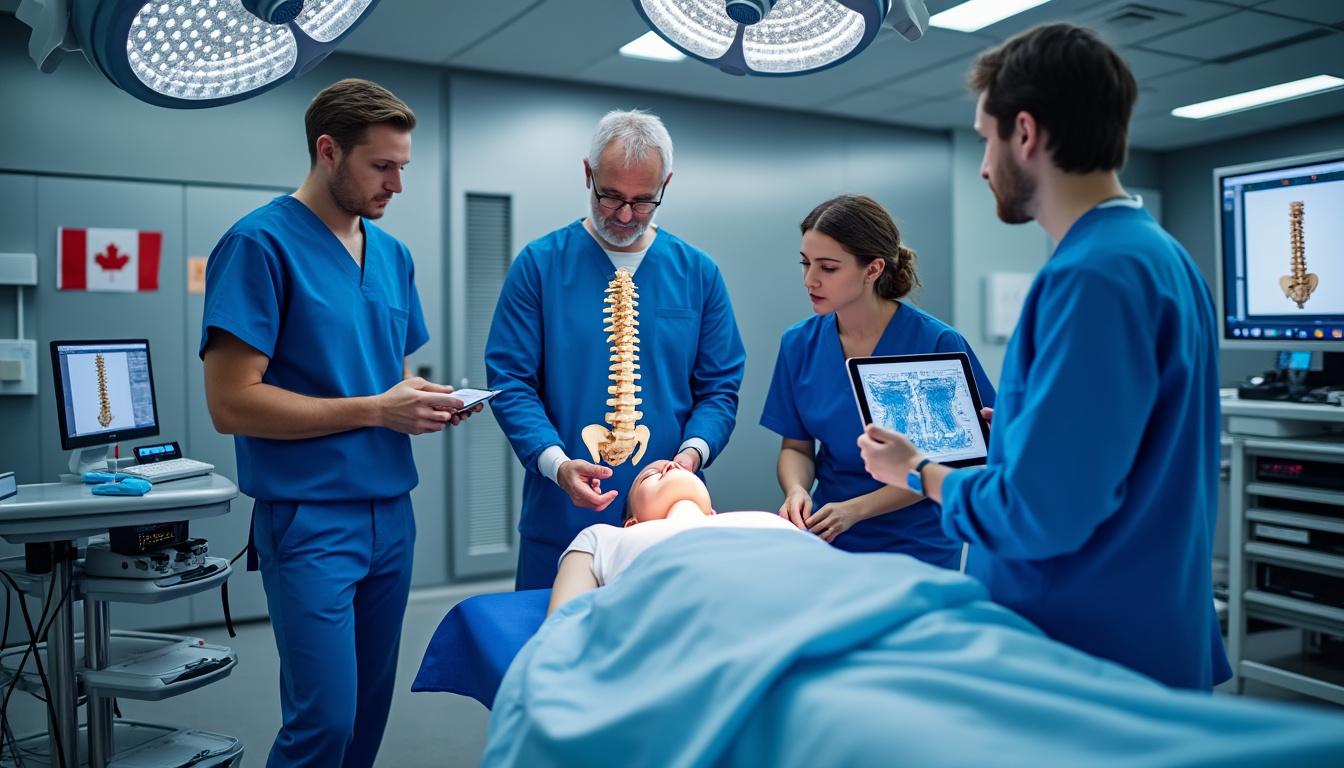
There spinal surgery has diversified considerably, responding to different functional needs, severities and patient expectations. The main approaches include simple surgery, spinal fusion and motion surgery, each with distinct techniques and objectives that directly influence clinical outcomes.
Simple surgery: targeted decompression and preservation of mobility
Simple surgery is primarily aimed at relieving nerve compression without immobilizing the spine. Typically, it involves procedures such as herniated disc or canal narrowing, where the aim is to release the nerves without resorting to fusion. This minimally invasive approach ensures maximum preservation of post-operative joint motion.
In practice, simple surgery means a short hospital stay, often less than 48 hours, and a gradual return to activity. However, it is not suitable in cases where vertebral instability exists. Despite its effectiveness in reducing pain, the risk of recurrence is significant, requiring monitoring and sometimes recourse to more intensive techniques.
Spinal fusion: stability at the cost of mobility
Spinal fusion, or arthrodesis, has long been the standard reference in cases of severe instability, significant deformity or symptomatic spondylolisthesis. This procedure involves blocking one or more vertebral segments with bone grafts and metal implants, providing solid mechanical stability but inducing a definitive loss of mobility at the operated level.
Clinical results show a significant reduction in mechanical pain and effective symptom control in many cases. However, locking often results in biomechanical overloading of adjacent segments, leading to wear and possible long-term recurrence. Post-operative recovery is generally slower, often requiring prolonged rehabilitation and careful pain management.
Motion surgery: innovation to preserve mobility
Motion surgery represents the latest generation of techniques designed to reconcile stabilization and preservation of natural movement. Thanks to dynamic implants such as the TOPS system or the disc prosthesis With IntraSPINE, it is now possible to treat moderate instability while maintaining the segmental flexibility essential for good spinal function.
These implants, developed in France in particular, enable controlled absorption of biomechanical forces, limiting stress on adjacent discs and preventing secondary segmental osteoarthritis. Patients benefit from an often faster recovery, a marked reduction in pain and easier rehabilitation thanks to the maintenance of physiological movement.
In Quebec, this innovative technique is offered at the TAGMED clinic in Terrebonne, to complement specialized conservative treatments in neurovertebral decompression. Candidates are selected with the utmost rigor, and undergo a thorough assessment by experts to guarantee the relevance and durability of the results.
Key steps in the Québec-France patient pathway for spinal surgery
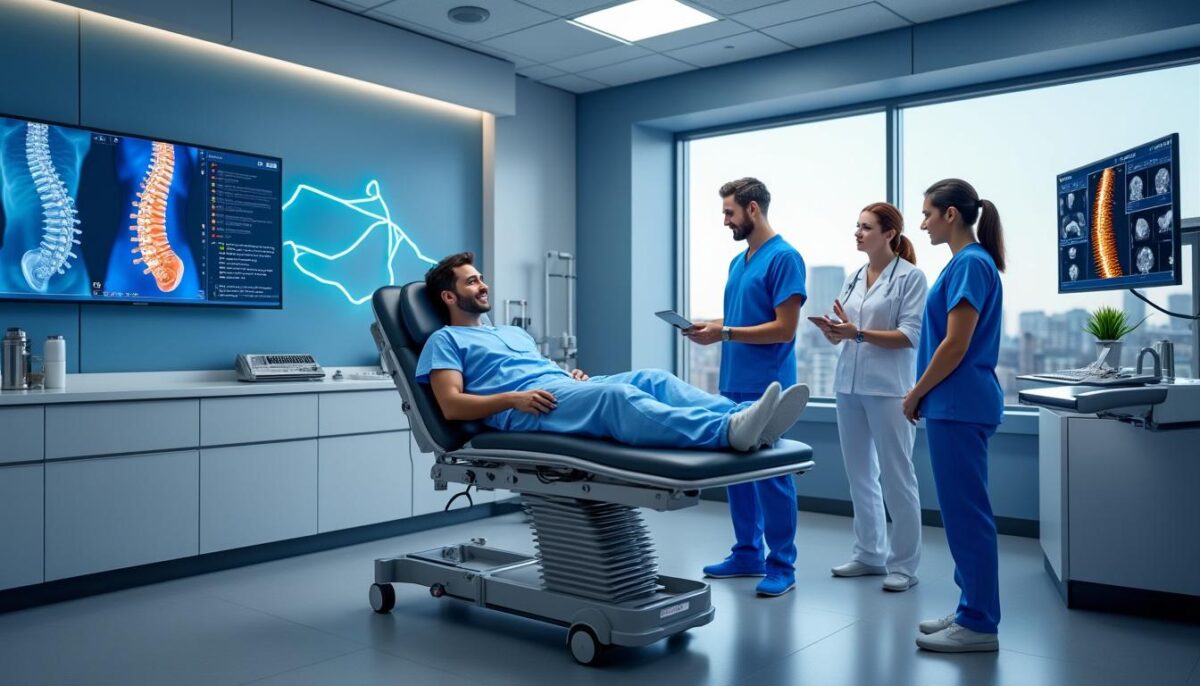
The transatlantic route is distinguished by its precise organization, coordinated by a network of experts and facilities. Every step of the process is designed to maximize patient safety, efficiency and comfort.
Initial evaluation and specialized conservative treatments at Clinique TAGMED
It all starts with a thorough evaluation by Dr. Sylvain Desforges and his team at the TAGMED Clinic in Terrebonne and Montreal. This critical phase determines the severity of the pathology and validates the indications for simple, fusion or motion surgery.
Before considering any intervention, conservative treatment for 3 to 6 months is essential. This includes controlled robotic neurovertebral decompression, decompression, supported by evidence-based practices, can reduce pain mechanisms without invasive surgery. Indeed, if decompression has not been performed in previous trials, it is recommended before any surgery. This step is an ethical pledge of scientific rigor and safety.
Organization and referral to surgical services in France
Once the need for surgery has been confirmed, the patient receives personalized support from the company SOS Medical Tourism and Cross. These partners provide referrals to expert French centers and surgeons recognized for their mastery of innovative techniques and dynamic implants.
They also coordinate all the logistics of the operation: medical appointments, administrative procedures, accommodation and bilingual support. This greatly facilitates the process, reduces anxiety and optimizes operating conditions.
Multidisciplinary post-operative follow-up upon return to Québec
Medical follow-up by Neurotherapy Montreal, This is an essential step towards long-term success. This individualized rehabilitation includes support for pain management, scar control, adapted physiotherapy and psychosocial support.
The dialogue between the French and Quebec teams facilitates therapeutic adjustments according to the patient's clinical evolution and needs, thus ensuring an uninterrupted chain of care.
Biomechanical, economic and human advantages of the transatlantic route
The Québec-France route offers multiple benefits that go beyond the technical aspects alone.
Technological innovation at the service of patients
Motion surgery, in particular with implants such as TOPS or IntraSPINE, represent a major advance in preserving mobility and reducing the risk of long-term complications. Combined with minimally invasive, robotic-assisted techniques, these methods enable better functional improvement, in particular via a significant pain reduction and accelerated post-operative recovery. These advances translate directly into improved quality of life and reduced dependence on drug treatments.
Economic and logistical optimization for Quebec patients
By bypassing the often lengthy waiting times in Quebec, and benefiting from a French hospital system recognized worldwide for its excellence and innovations, patients gain rapid access to appropriate care. As a result, the user gains autonomy sooner, with an optimized return to professional and family activities, while keeping overall costs under control.
Human support and exemplary coordination
Beyond the medical dimension, this program offers a reassuring, human follow-up. The constant exchanges between Dr. Desforges, the French surgeons and the Montreal Neurotherapy teams ensure an attentive, truly person-centred presence. This educational support helps patients to understand their treatment, its benefits and limitations, facilitating healthy, motivated adherence to their rehabilitation.
Comparative table of the main spine surgery techniques
Essential criteria for choosing between fusion and motion surgery
The choice between fusion and motion surgery is a delicate one, based on a comprehensive assessment incorporating a number of medical and personal factors. Here are the key criteria:
Segmental mobility status Preserving movement favors motion, while extensive immobilization leads to fusion.
Type and severity of instability Moderate instability is compatible with motion, severe instability often justifies fusion.
Bone integrity and absence of infection These are the prerequisites for all surgery.
Response to conservative treatments These are essential before any invasive procedure, and have been validated at Clinique TAGMED.
Patient lifestyle and expectations High activity levels and a desire for mobility have an impact on the decision.
This clear framework promotes informed, humane and personalized decision-making, avoiding premature interventions and optimizing clinical outcomes.
Patients are encouraged to actively seek information and discuss with their medical team to fully understand the implications of each technique and choose the one best suited to their specific situation.
The importance of conservative treatment before surgery
One of the cornerstones of the treatment path recommended by Dr. Sylvain Desforges is rigorous conservative treatment. This is essential to avoid unnecessary surgery, and to prepare the ground as well as possible should surgery become unavoidable.
The TAGMED Clinic, renowned for its advanced approach, offers robotic neurovertebral decompression, a sophisticated technique that effectively relieves nerve compression. This method, combined with targeted physiotherapy and appropriate pain management, is often sufficient to improve symptoms without recourse to surgery.
Patients are generally required to complete a 3-6 month cycle of conservative treatments, which favors a better selection of candidates for surgery and optimized results. Professional ethics and scientific rigor are at the heart of this process, guaranteeing safety and compliance with Quebec and Canadian standards.
Should these treatments fail, patients will be able to approach surgery with optimal, conscious and safe preparation.
Why choose Quebec-France transatlantic support?
Beyond surgical techniques, the transatlantic journey responds to the strong aspirations of Quebec patients:
Shorter lead times avoid long waiting times while accessing high-quality care.
Access to innovations benefit from advanced technologies not always available locally.
Personalized support A coordinated, human approach at every stage, from assessment to rehabilitation.
Cost optimization : améliorer le rapport qualité-prix en profitant des avantages du système français.
Coordination rigoureuse : entre le Dr Desforges, la Clinique TAGMED, les équipes françaises et Neurothérapie Montréal, pour une prise en charge continue et sécuritaire.
Ce modèle mêle harmonieusement rigueur scientifique, technologie médicale de pointe et dimension humaine essentielle. Pour tous ceux qui envisagent une back surgery ou du cou, cette solution offre un équilibre inédit et une perspective d’amélioration tangible de la qualité de vie.
Pour une première évaluation ou pour discuter de votre situation et explorer les options adaptées, n’hésitez pas à contacter les experts via la plateforme SOS Medical Tourism. Une équipe dédiée vous accompagnera en toute transparence et sécurité, selon les meilleures pratiques franco-québécoises.
Dr. Sylvain Desforges is the founder of SOS Tourisme Médical. With over 35 years of expertise in evaluating spinal disorders and supporting patients with chronic spinal conditions, Dr. Sylvain Desforges has established himself as a leading authority for Canadians seeking access to innovative back and neck surgery in France. Renowned for his clinical rigor and teaching skills, he performs in-depth evaluations and supervises conservative treatments—particularly non-surgical spinal decompression therapy—at TAGMED, prior to any surgical procedure. Through SOS Tourisme Médical, he coordinates a network of complementary partners:Neurothérapie Montréal, for specialized preoperative examinations and postoperative follow-up (neuromtl.com), Franchir, for referrals to the best spine centers and surgeons in France, as well as complete logistical organization of the stay (franchir.eu),and TAGMED for initial assessment and conservative treatments (cliniquetagmed.com). Every day, he is committed to informing, guiding, and supporting patients at every stage: understanding techniques and implants (TOPS™, Intraspine®, disc prostheses, etc.), explaining eligibility criteria, administrative procedures, practical organization, and follow-up until their return to Quebec. Its goal: to guarantee a fast, personalized, and transparent care pathway, in complete safety, to enable everyone to regain mobility and quality of life thanks to advances in spinal surgery. For more information or for a personalized assessment, discover the pathway offered by SOS Tourisme Médical or contact us directly via the online form.





Testimonials from convalescent patients: indications, benefits and limitations
Learn more