Summary of: Back pain and the need to consult a specialist
Le mal de dos, en particulier les douleurs lombaires, est un problème courant qui nécessite une attention particulière pour déterminer quand consulter un spécialiste. En 2025, les avancées en chirurgie du bas du dos, notamment en France, offrent aux patients un accès à des soins de qualité. Cet article explore les signes d'alerte pour consulter un professionnel, les différents spécialistes impliqués, ainsi que les traitements conservateurs et chirurgicaux disponibles.
Top 5 Tips to Remember
Consulter un spécialiste est crucial en cas de douleur persistante ou aiguë après un traumatisme.
Les symptômes tels que l'engourdissement ou la perte de contrôle de la vessie nécessitent une attention médicale immédiate.
Différents spécialistes, comme les neuro-chirurgiens et les chirurgiens orthopédistes, jouent des rôles clés dans le traitement des douleurs lombaires.
Conservative treatments, such as physiotherapy and neurovertebral decompression, are often effective before considering surgery.
La collaboration entre le Canada et la France facilite l'accès à des soins avancés pour les patients canadiens.
Back pain is a widespread disorder affecting millions of people worldwide. Yet knowing when it's time to consult a back specialist is often a source of uncertainty. Whether it's temporary pain due to stress or muscular fatigue, or alarming symptoms revealing more serious pathologies, a judicious choice of healthcare professional is essential. In 2025, lower back surgery continues to benefit from major advances, particularly in France, which offers international patients, including Canadians, access to best practices. surgery thanks to a network of specialists coordinated.
The choice of doctor or therapist can significantly influence the quality of treatment and speed of recovery. Orthopaedics, neurology, physiotherapy and other disciplines converge to offer a care pathway adapted. It is vital to distinguish between signs requiring urgent consultation with a neurosurgeon or orthopedic specialist, and simple advice from a rheumatologist or physiotherapist. This complete guide details the essential criteria for consulting a specialist, the different medical players involved depending on the situation, and the conservative and surgical treatments available in 2025, in both France and Canada.
There back pain management goes beyond the traditional medical approach and now includes innovative treatments, as well as a transatlantic collaboration that facilitates Canadian patients' access to cutting-edge care carried out in France. Every step of the way, from initial assessment to post-operative rehabilitation, is giving way to protocols rigorous and personalized care, within a reliable, secure and efficient network. As a result, patients can be sure of a personalized service that meets both their expectations and the most stringent medical requirements.
Identifying the signs to consult a low back surgery specialist
In the majority of cases, back pain is mechanical and transient, requiring only conservative treatment and rest. However, certain symptoms indicate a more serious condition, where specialist intervention is imperative to prevent serious or even irreversible consequences. For example, acute pain following a fall or trauma requires prompt consultation to rule out bone or nerve damage. Similarly, pain that does not subside after more than four weeks, despite analgesic treatment, should raise a red flag.
Here are the warning signs that justify an emergency or specialized consultation:
More intense pain at night, This is particularly true if it wakes the patient up or prevents them from falling asleep, which is not typical for ordinary back pain.
Pain associated with persistent fever that does not respond to treatment, which may indicate a spinal infection.
Sensations of numbness or loss of sensitivity in the leg, foot or genital region, which may be suggestive of ponytail syndrome, a medical emergency.
Loss of bladder or bowel control indicating severe nerve compression.
Unexplained weight loss accompanied by back pain, which could be the sign of a tumor or infection.
Visible deformations back or severe trauma requiring specialized orthopedic evaluation.
In the presence of these symptoms, consultation with a neurosurgeon or orthopedic surgeon is essential. This vigilance is essential to avoid aggravation and chronicization of the condition. Depending on the suspected pathology, the professional will recommend the best possible treatment, whether surgical or conservative.
Symptom
Possible meaning
Recommended specialist
Emergency
Acute pain after a fall
Bone or disc lesion
Orthopedic surgeon
High
Persistent pain + ineffective painkillers
Chronic problem or worsening
Rheumatologist / Orthopedist
Average
Numbness in genital area and legs
Ponytail syndrome
Neurosurgeon
Very high
Fever with back pain
Infection
Neurosurgeon
High
Unexplained weight loss
Suspected tumor
Neurosurgeon / Oncologist
High
For more information on qualifying for surgery and organizing the patient pathway, see SOS Medical Tourism.
Key specialists in the management of low back pain and their role
The lower back is a complex area, subject to daily stress and a variety of disorders that can affect the spine, nerves, muscles and joints. Depending on the nature and severity of the pathology, different specialists intervene to guide, treat and support the patient.
Neurosurgeon: the expert in nerve dysfunction and spinal surgery
When back pain is accompanied by severe neurological symptoms such as sensory, motor or sphincter disorders, the neurosurgeon is the specialist of choice. These signs indicate damage to the nerve roots or spinal cord, often warranting surgical intervention. For example, in the case of herniated disc lumbar compression or cauda equina syndrome, its management is essential to limit sequelae.
Orthopedic surgeon: specialist in mechanical disorders and trauma of the spine
Orthopedic surgeons intervene to correct deformities, fractures and other mechanical anomalies affecting the spine. They are also skilled at assessing the indication for surgery and proposing suitable options, ranging from stabilization by arthrodesis to less invasive techniques. Their expertise is often called upon after trauma or in cases of disabling spinal osteoarthritis.
Rheumatologist: treating inflammatory and degenerative diseases
The rheumatologist is mainly involved in chronic non-surgical back pain, such as degenerative disc disease, spondyloarthropathy or osteoporosis. The rheumatologist provides detailed medical follow-up, with appropriate drug prescriptions, and sometimes offers infiltrations to relieve inflammatory pain.
GPs and physiatrists: first points of contact and conservative management
Often, the first professional consulted is the general practitioner, who plays a central role in the initial assessment, prescription of analgesics, and coordination with specialists. The physiatrist, on the other hand, is a rehabilitation expert who refers patients to non-surgical treatments, physiotherapy and functional rehabilitation aimed at improving mobility and reducing pain.
Complementary therapists and functional rehabilitation
Physiotherapists and physiotherapists play a key role in patient education, setting up therapeutic exercise programs and maintaining functional capacity. Occupational therapists can also intervene to adapt the living environment and the workstation, thus limiting the strain on the back.
To optimize your consultation and access the best treatment and surgical options, discover the resources offered by SOS Medical Tourism.
When lower back surgery becomes an unavoidable option
There lumbar spine surgery is considered when conservative treatments fail to relieve the patient, or in cases where neurological health is directly threatened. In France surgical techniques have evolved considerably, moving from conventional open interventions to minimally invasive procedures, sometimes assisted by endoscopy. This evolution aims to reduce hospitalization time, minimize post-operative pain, and optimize functional recovery.
Classic indications include :
Symptomatic disc herniation with disabling nerve compression.
Spinal instability after fracture or severe degeneration.
Severe spinal deformities such as progressive scoliosis.
The implants used in France include highly advanced devices such as the disc prostheses, the dynamic stabilization systemTOPS, or implants Intraspine, These implants help maintain mobility while stabilizing the spine. These implants help preserve quality of life post-operatively, avoiding the side effects associated with traditional spinal fusion, notably rigidity.
To find out more about the lower back surgical solutions available in France, visit SOS Medical Tourism.
Patient pathways and transatlantic collaboration: the bridge between Canada and France
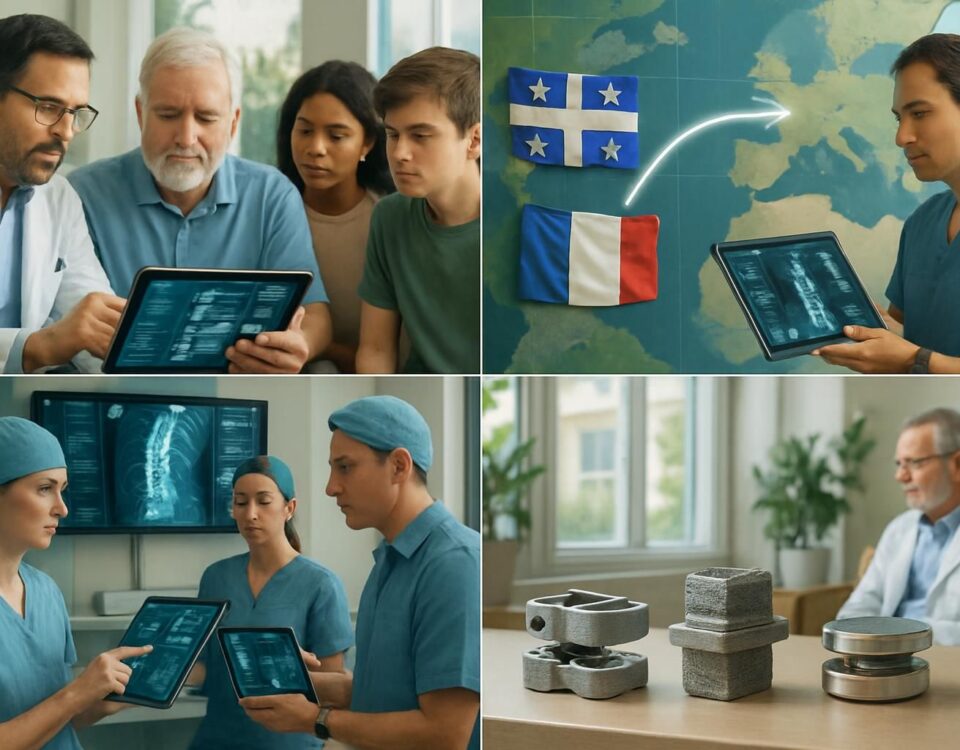
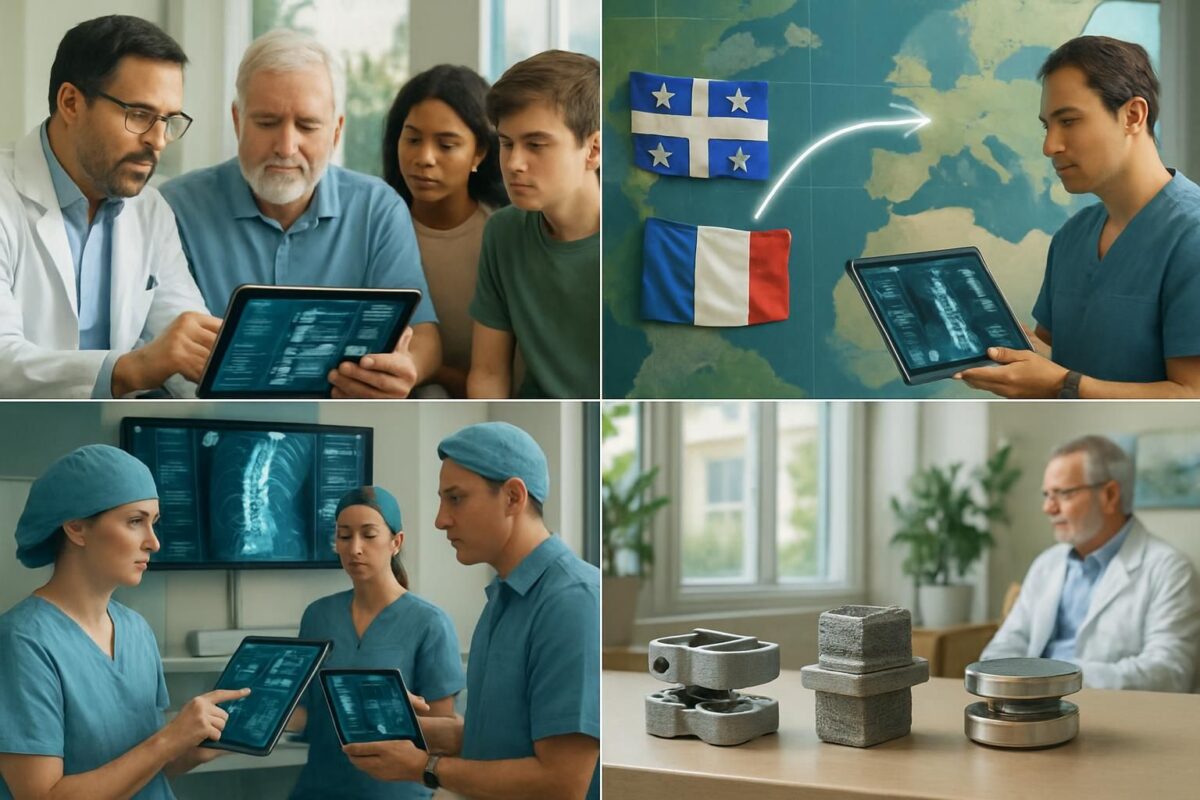
Canadian patients facing a need for lower back surgery can now benefit from an innovative care pathway thanks to close collaboration between French and Quebec players. This alliance guarantees fast, safe and totally personalized care.
Initial assessment and conservative treatment in Canada
Prior to any surgical procedure, it is essential to carry out a thorough patient assessment. Visit Dr. Sylvain Desforges and his team at TAGMED clinics in Terrebonne and Montreal take care of this crucial step. They are responsible for the complete evaluation of patients and files, as well as the supervision of specialized conservative treatments in neurovertebral decompression, such as computer-controlled robotic cervical and lumbar traction. These treatments never include physiotherapy.
Orientation and organization of your stay in France
The Franchir company plays a key role in guiding every patient to surgeon and the French center best suited to the medical condition and type of implant envisaged. We also take care of all travel, accommodation and logistical arrangements. This all-inclusive care guarantees a serene experience focused on healing.
Post-operative follow-up and rehabilitation in Canada
After returning home, Neurothérapie Montréal provides individual support and rigorous patient follow-up, guaranteeing lasting surgical results and optimal rehabilitation.
Initial assessment: Dr Sylvain Desforges and TAGMED (https://www.cliniquetagmed.com)
Orientation and organization : Cross (https://www.franchir.eu)
This network guarantees a smooth and secure pathway, avoiding excessively long delays and facilitating access to innovative surgical techniques.
What conservative treatments are needed before considering lower back surgery?
Before surgery is considered, the majority of patients benefit from conservative treatments, which often lead to a significant improvement in the symptoms. lower back pain. In France and Canada, rehabilitation guides initial management, focusing on reducing inflammation, restoring function and preventing chronicity.
The main conservative treatments are
Décompression neurovertébrale robotisée : traction lumbar or cervical to improve disc pressure and promote blood circulation.
Structured physiotherapy Personalized exercise programs to strengthen muscles and improve mobility.
Analgesics and anti-inflammatories Prescribed to relieve pain without masking important symptoms.
Therapeutic education Information on posture, gestures to avoid, and daily pain management.
Ergonomic approaches Adapting living and working spaces to reduce stress on the spine.
It is important to note that Dr. Sylvain Desforges and his team at TAGMED supervise these treatments specialized in neurovertebral decompression in Canada, offering state-of-the-art expertise prior to any possible surgery.
FAQ - Back pain consultation and treatment: answers to frequently asked questions
Question
Answer
When should I consult a specialist for back pain?
If pain persists for more than three days despite rest and analgesic treatment, or if neurological symptoms appear (numbness, loss of strength, sphincter disorders).
Which specialists to consult first?
The general practitioner for an initial assessment, who may refer you to a rheumatologist, neurosurgeon or orthopedist depending on the clinical signs.
What type of surgery is best for the lower back?
Minimally invasive surgery and the use of dynamic implants such as TOPS are preferred to reduce side effects and promote recovery.
In Canada, follow-up is provided by specialized structures such as Neurotherapy Montreal, and personalized support.
Is the French-Canadian route safe?
Oui, grâce à la collaboration entre TAGMED, Franchir, SOS Medical Tourism et Neurothérapie Montréal, ce parcours est conçu pour être rapide, sûr, et entièrement individualisé.
Pour plus d’informations sur le parcours complet en chirurgie du bas du dos pour patients canadiens, visitez SOS Medical Tourism.
Dr. Sylvain Desforges is the founder of SOS Tourisme Médical. With over 35 years of expertise in evaluating spinal disorders and supporting patients with chronic spinal conditions, Dr. Sylvain Desforges has established himself as a leading authority for Canadians seeking access to innovative back and neck surgery in France. Renowned for his clinical rigor and teaching skills, he performs in-depth evaluations and supervises conservative treatments—particularly non-surgical spinal decompression therapy—at TAGMED, prior to any surgical procedure. Through SOS Tourisme Médical, he coordinates a network of complementary partners:Neurothérapie Montréal, for specialized preoperative examinations and postoperative follow-up (neuromtl.com), Franchir, for referrals to the best spine centers and surgeons in France, as well as complete logistical organization of the stay (franchir.eu),and TAGMED for initial assessment and conservative treatments (cliniquetagmed.com). Every day, he is committed to informing, guiding, and supporting patients at every stage: understanding techniques and implants (TOPS™, Intraspine®, disc prostheses, etc.), explaining eligibility criteria, administrative procedures, practical organization, and follow-up until their return to Quebec. Its goal: to guarantee a fast, personalized, and transparent care pathway, in complete safety, to enable everyone to regain mobility and quality of life thanks to advances in spinal surgery. For more information or for a personalized assessment, discover the pathway offered by SOS Tourisme Médical or contact us directly via the online form.




Chirurgie simple, fusion, motion : ce que tout patient devrait connaître
Learn more