Résumé de: Décompression neurovertébrale : une solution innovante pour les douleurs dorsales
Chaque année, de nombreux patients québécois souffrant de douleurs dorsales chroniques se heurtent à des listes d'attente longues et des coûts élevés pour des interventions. La décompression neurovertébrale, une méthode non invasive, émerge comme une alternative prometteuse. Dirigée par le Dr Sylvain Desforges, cette approche combine expertise médicale et technologies avancées pour offrir un suivi complet, allant de l'évaluation à la rééducation post-opératoire, tout en soulignant l'importance des traitements conservateurs.
Top 5 Tips to Remember
Neurovertebral decompression is a non-invasive method of relieving back pain.
It uses a controlled traction system to reduce pressure on the spine.
Dr Sylvain Desforges supervises treatment protocols at the TAGMED clinic.
Full follow-up is provided, from initial assessment to post-operative rehabilitation.
Les traitements conservateurs sont essentiels avant d'envisager une chirurgie.
Every year, many Quebec patients suffering from chronic back pain are faced with long waiting lists and high costs for specialized interventions. The search for effective, safe and appropriate alternatives becomes a priority. In this context, neurovertebral decompression is emerging as an innovative, non-invasive therapeutic solution that is attracting growing attention. With over thirty years' experience and a B.Sc., D.O., N.D. qualification, Dr. Sylvain Desforges embodies this expertise in the evaluation of neuro-spinal decompression. spinal disorders. For several decades now, it has been helping to develop personalized care, combining scientific rigor with cutting-edge technologies, particularly in the context of a transatlantic patient pathway between Canada and France.
Technical advances now offer treatments that combine efficacy and safety, with implants such as TOPS or Intraspine and minimally invasive procedures supervised by multidisciplinary teams. Thanks to close coordination between the TAGMED clinic, Neurothérapie Montréal and the Franchir company, patients can benefit from comprehensive follow-up care, from initial assessment through to post-operative rehabilitation. This model enriches medical management and offers a promising alternative for those wishing to maximize their chances of success while minimizing risks. With this approach, Dr. Desforges underlines the importance of a prior phase of conservative treatments, in particular the neurovertebral decompression before considering surgery. An approach that promotes informed understanding, ethical collaboration and a valued human experience.
Understanding neurovertebral decompression: principles, mechanisms and clinical benefits
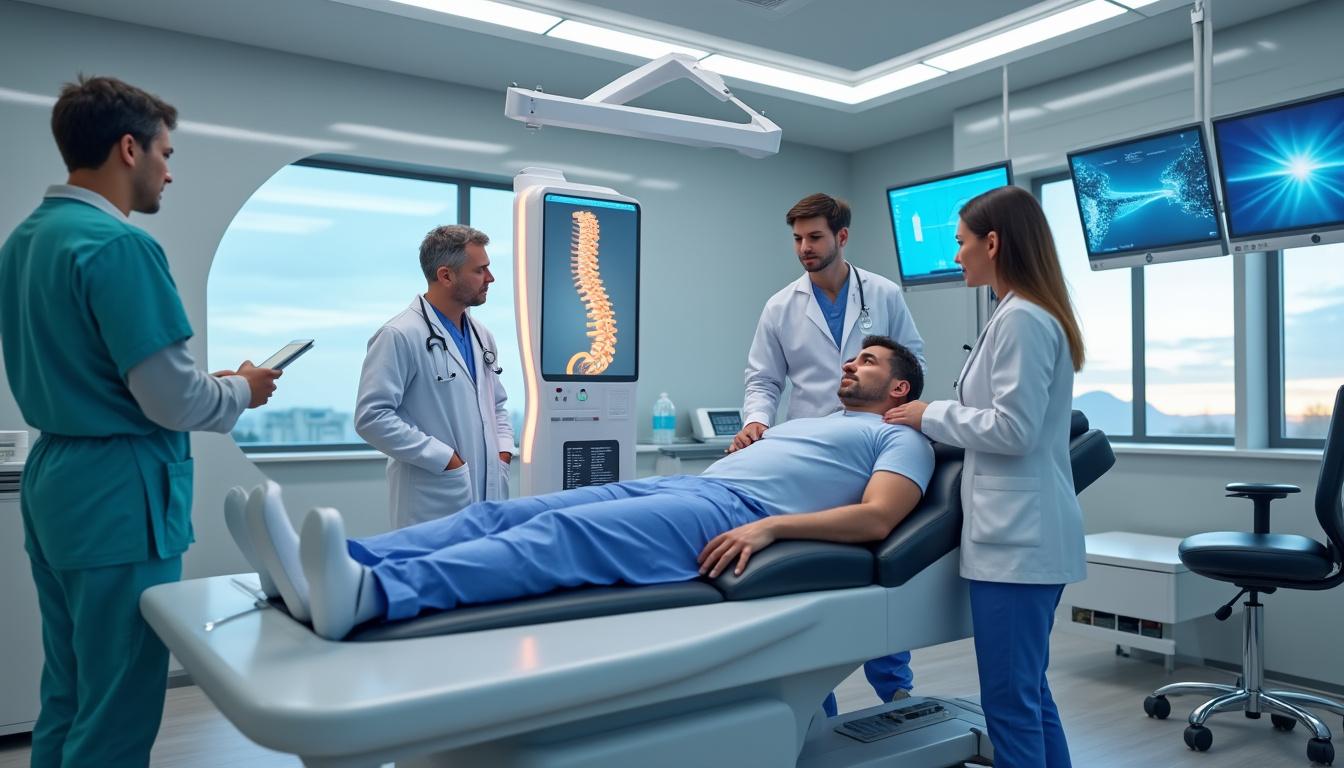
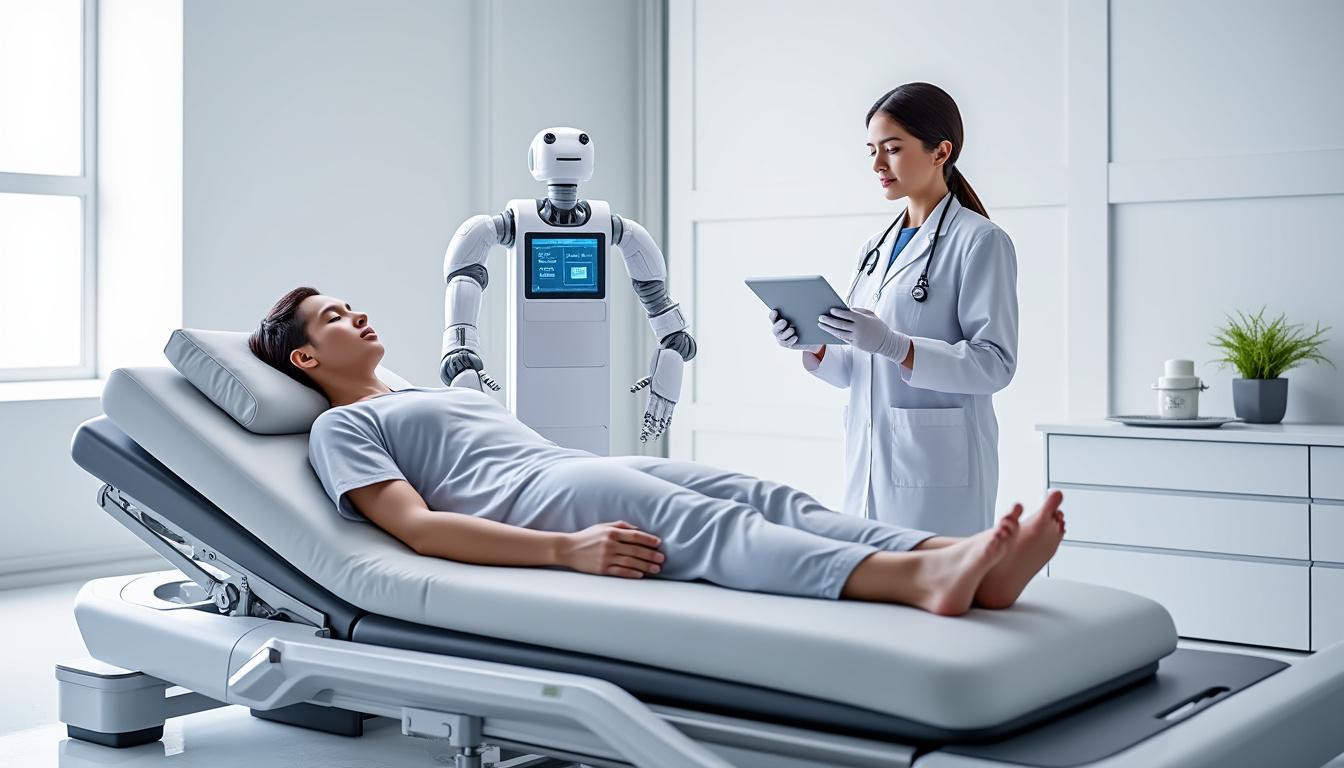
There neurovertebral decompression is a targeted therapeutic method designed to relieve pressure on the backbone, This is particularly important for intervertebral discs and spinal nerves. It relies on a system of controlled traction, often robot-assisted, which increases the disc space, favoring a return to normal spinal biomechanical conditions. Beyond the immediate reduction of back pain, This technique encourages functional restoration, limiting the risk of aggravation of pathologies such as herniated disc or foraminal stenosis.
The Dr. Sylvain Desforges, a recognized medical expert, supervises these protocols at the TAGMED clinic. His approach is based on scientific rigor validated by clinical studies accessible via platforms such as clinical studies proving the effectiveness of neurovertebral decompression and associated expert opinions. These studies demonstrate a significant reduction in pain in over 80% of patients, as well as a remarkable improvement in spinal mobility - the key to a return to an active life.
Detailed mechanisms of action and precise indications
Targeted, controlled traction The spine is gently stretched, relieving pressure on the discs and increasing the volume of the intervertebral spaces.
Effect on nerve compression Reducing nerve pressure alleviates painful radiations, numbness and muscle weakness.
Improving local traffic flow This mechanism facilitates the supply of oxygen and essential nutrients for tissue repair.
Main indications lumbar disc herniations, disc protrusions, cervical foraminal stenosis and osteoarthritis often disabling in everyday life.
Tangible clinical results for Quebec patients
Thanks to the decompression treatments offered at TAGMED, patients experience :
Lasting pain reduction, even after several weeks of treatment.
The transatlantic patient pathway guided by experts: assessment, conservative treatments and surgery
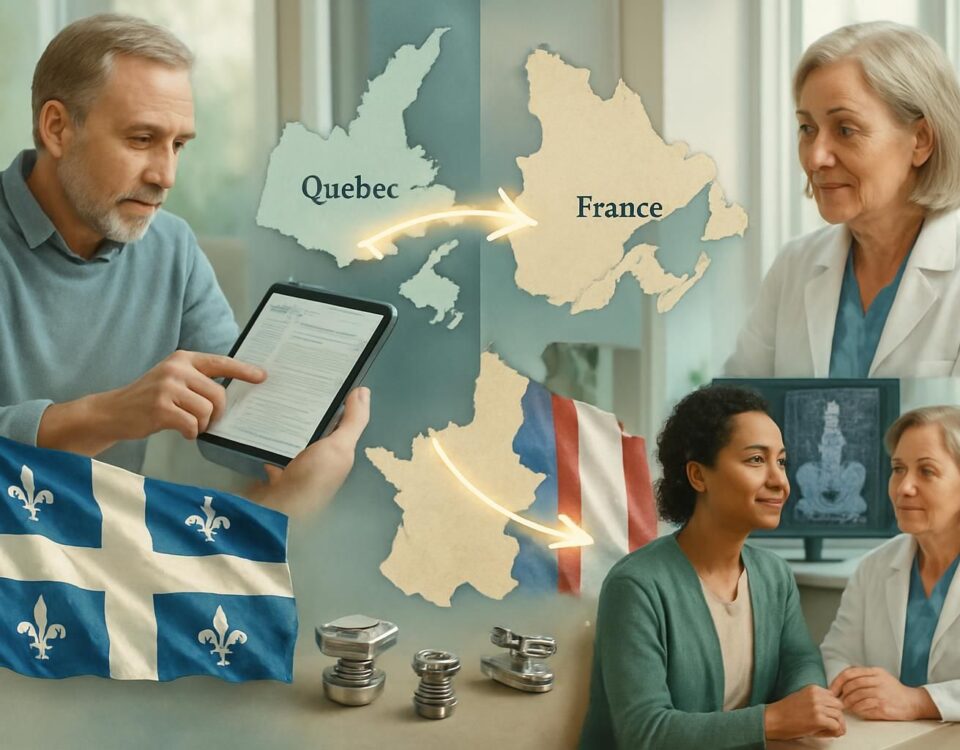
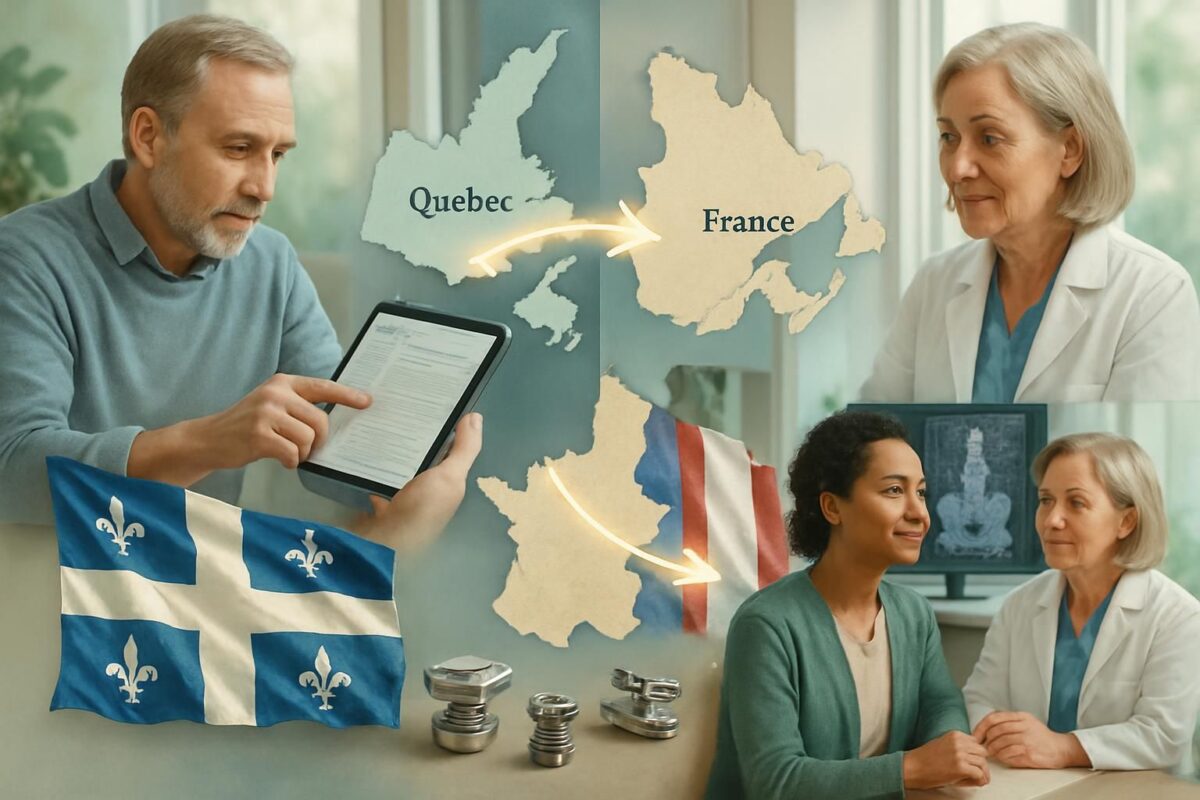
The model developed by Dr. Sylvain Desforges is a perfect illustration of the complementarity between Quebec medical expertise and French surgical innovation. This coordination involves several key players: TAGMED for the evaluation and supervision of specialized treatments, Franchir for surgical referral and organization of the stay in France, and Neurothérapie Montréal for post-operative follow-up and rehabilitation.
Comprehensive evaluation and specialized conservative treatments at TAGMED
Before considering any surgical procedure, Dr. Desforges ensures a thorough review of patient files. This process is designed to confirm the suitability of robotic neurovertebral decompression, and to oversee individualized, tailored protocols. This is always an essential step, governed by a rigorous and ethical scientific approach.
Meticulous analysis of history and symptoms.
Use of the latest computer-controlled traction technology.
Patient education on spinal dynamics and care principles.
Développement d’un plan thérapeutique de 3 à 6 mois privilégiant la décompression avant toute chirurgie.
This conservative protocol is essential: as Dr Desforges reminds us on SOS Medical Tourism, Only surgical interventions performed after this interval guarantee safety and relevance, thus avoiding premature or inappropriate surgery.
Tailor-made organization of your surgical stay in France with Franchir
When conservative treatments have failed to produce the desired results, Franchir takes charge of referring the patient to a suitable French surgeon, as well as organizing the entire trip, stay and in-clinic procedures. This key service enables :
Access to state-of-the-art surgical procedures and innovative implants such as the TOPS or the Intraspine prosthesis.
A rigorous selection of clinics and surgical teams based in France, meeting the highest standards.
Administrative management to facilitate procedures, insurance and logistics, giving patients peace of mind.
Personalized pre-operative care, to help prepare each patient physically and mentally.
Comprehensive post-operative care for optimal recovery
Once back in Quebec, Neurothérapie Montréal plays a crucial role. This specialized team provides personalized follow-up, tailored rehabilitation and post-operative monitoring. This coordinated continuum optimizes the chances of lasting success, while respecting surgical recommendations.
Ongoing assessment of motor and functional recovery.
Support in managing pain and adapting daily activities.
Psychological and motivational support for overall recovery.
Fluid communication with the French teams to discuss developments.
Step
Manager
Description
Initial assessment
Dr Sylvain Desforges (TAGMED)
In-depth case analysis and clinical examination to recommend conservative treatment
Conservative treatments
TAGMED team
Robotic neurovertebral decompression, education and personalized pre-surgery follow-up
Surgical referral and organization of stay
Cross
Center selection, surgeon, hospitalization and logistics in France
Surgical procedure
French surgeon
Minimally invasive techniques and innovative implants (TOPS, Intraspine)
Postoperative follow-up
Neurotherapy Montreal
Rehabilitation, pain management and monitoring after return to Canada
Expert testimony from neurosurgery The success of this coordinated approach is also underlined by the complementary nature of the expertise involved and the confidence gained by patients.
Innovative surgical techniques available in France: fusion, motion and minimally invasive procedures
France stands out for its innovative spinal surgery offering, with solutions that better preserve mobility and post-operative quality of life. These techniques fit in perfectly with the dynamics of an international course supervised by experts such as Dr Desforges and the French partners.
Fusion surgery (arthrodesis): improved conventional stabilization
The aim of this procedure is to fuse two or more vertebrae in order to eliminate pathological movement that causes pain. While it remains the standard technique, fusion surgery today relies on minimally invasive procedures and latest-generation implants to reduce the impact on surrounding tissues.
Indications severe vertebral instability, advanced arthrosis, fractures.
Complementary techniques 3D imaging, robotic assistance for greater precision.
Benefits increased safety, reduced bleeding and postoperative pain.
Disadvantages partial loss of mobility at the operated site.
Motion-preserving surgery: dynamic implants to maintain mobility
Systems such as TOPS or Intraspine embody this major step forward, offering dynamic stabilization which limits the functional penalty associated with conventional fusion. These implants preserve the spine's natural movements while correcting mechanical disorders.
Mainly indicated for certain herniated discs, moderate instability and localized arthrosis.
Reduced pain thanks to better respect for vertebral biomechanics.
Promote faster functional recovery and a quicker return to activity.
Available via the French surgical circuit, managed by the Franchir company.
Minimally invasive and robotic procedures: precision and safety
Robot-assisted surgery, with 3D navigation, has become standard in several centers in France, offering undeniable benefits:
Greater precision in implant placement.
Reduced surgical trauma and operating time.
Reduced risk of neurological complications.
Reduced post-operative follow-up and shorter hospital stays.
The importance of conservative treatment prior to surgery
As part of an optimal treatment pathway, it is essential to undergo at least 3 to 6 months of specialized conservative treatment beforehand. This rule, rigorously applied by Dr. Desforges, is designed to maximize results and minimize the risks associated with surgery.
The robotic neurovertebral decompression offered at Clinique TAGMED is the cornerstone of this phase. It is accompanied by complementary techniques such as Class IV laser therapy, which acts to reduce local inflammation and promote tissue healing. On this platform, A number of case studies illustrate these clinical successes.
Strict adherence to the minimum delay to optimize the effectiveness of conservative treatment.
Prioritizing neurovertebral decompression as an innovative, targeted treatment.
Educational support to help patients understand their options and limitations.
Use of advanced, scientifically validated technologies.
Regular assessment by Dr Desforges to adjust treatments and decide on next steps.
This commitment to non-invasive initial management is a guarantee of neurological health and long-term success, avoiding unnecessary or premature surgery.
Main objective
Description
Expected profit
Avoid premature surgery
Complete 3 to 6 months of conservative care
Reducing surgical risks
Maximizing decompression efficiency
Targeted robotic traction, complementary laser
Lasting relief and functional restoration
Involving the patient
Clear information and educational support
Informed decision-making and greater confidence
Added value of the transatlantic model for Quebec patients
The international course supervised by Dr. Sylvain Desforges offers a unique setting combining Canadian and French expertise, state-of-the-art technologies and comprehensive human support. For Quebec patients, this model offers a number of advantages.
Accelerating access to care thanks to a significant reduction in waiting times compared with long local waiting lists.
Cost control compared with Canadian private care, while enjoying premium quality.
Advanced techniques dynamic implants, robotic surgery, innovative prostheses reserved for certain French establishments.
Global and personalized follow-up before, during and after surgery, ensuring a safe continuum of care.
Logistical and administrative support coordinated by Franchir and SOS Tourisme Médical.
A stronger human dimension We offer a full range of services: teaching, listening and psychological support along the way.
Major asset
Concrete impact for patients
A concrete example
Combined Canada-France expertise
In-depth diagnosis and personalized recommendations
Initial evaluation by Dr Desforges and surgical procedures in France
Cutting-edge technologies
Minimally invasive treatments offer less pain and better results
TOPS implants, robot-assisted surgery
Complete logistics organization
Stress-free stay, smooth transfer
Complete management by Franchir, followed by Neurothérapie Montréal
Shorter lead times
Faster interventions, earlier return to quality of life
Priority access to surgery in France
Psychological and motivational support
Better treatment adherence and successful rehabilitation
Personalized follow-up and post-operative coaching from Neurothérapie Montréal
This model, validated by numerous patients, represents a veritable revolution for the non-invasive treatment and spine surgery, offering a valuable balance between quality, safety and humanity.
Dr. Sylvain Desforges is the founder of SOS Tourisme Médical. With over 35 years of expertise in evaluating spinal disorders and supporting patients with chronic spinal conditions, Dr. Sylvain Desforges has established himself as a leading authority for Canadians seeking access to innovative back and neck surgery in France. Renowned for his clinical rigor and teaching skills, he performs in-depth evaluations and supervises conservative treatments—particularly non-surgical spinal decompression therapy—at TAGMED, prior to any surgical procedure. Through SOS Tourisme Médical, he coordinates a network of complementary partners:Neurothérapie Montréal, for specialized preoperative examinations and postoperative follow-up (neuromtl.com), Franchir, for referrals to the best spine centers and surgeons in France, as well as complete logistical organization of the stay (franchir.eu),and TAGMED for initial assessment and conservative treatments (cliniquetagmed.com). Every day, he is committed to informing, guiding, and supporting patients at every stage: understanding techniques and implants (TOPS™, Intraspine®, disc prostheses, etc.), explaining eligibility criteria, administrative procedures, practical organization, and follow-up until their return to Quebec. Its goal: to guarantee a fast, personalized, and transparent care pathway, in complete safety, to enable everyone to regain mobility and quality of life thanks to advances in spinal surgery. For more information or for a personalized assessment, discover the pathway offered by SOS Tourisme Médical or contact us directly via the online form.



 Français du Canada
 English (Canada)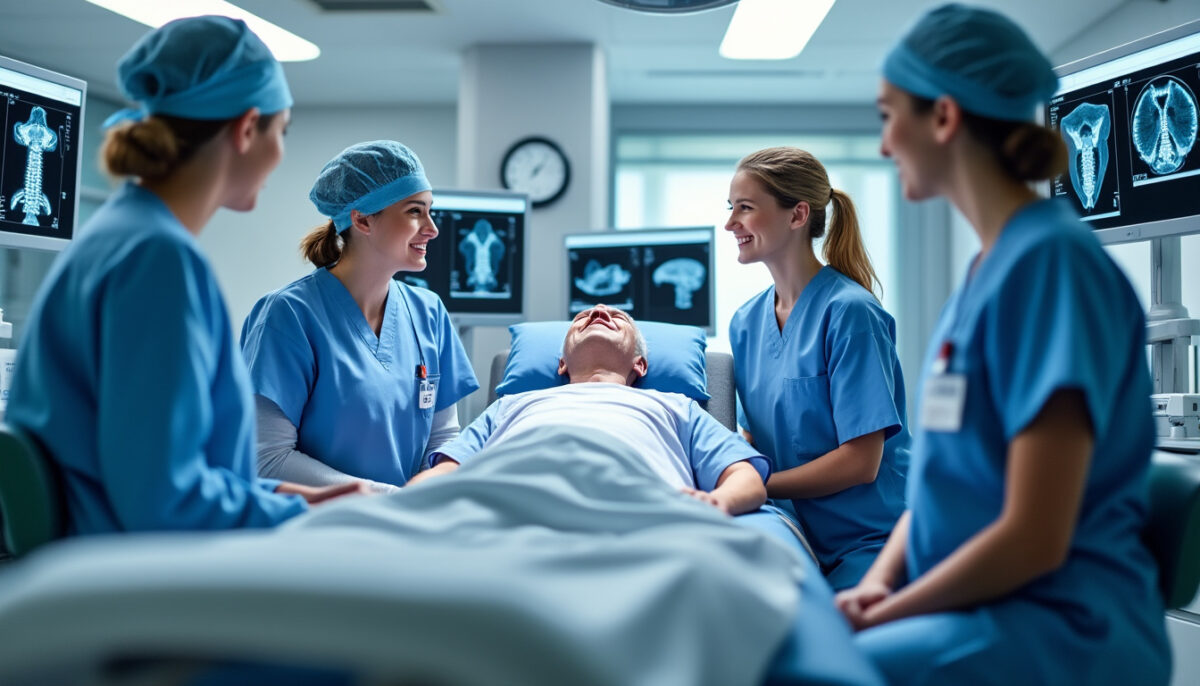
Le rôle de récupération fonctionnelle par paliers dans un parcours réussi
Learn more