Les interventions chirurgicales pour soulager les douleurs lombaires sont essentielles en 2025, surtout pour les patients avec des pathologies complexes. La réussite dépend d'une évaluation précise et d'un choix de techniques adaptées. La collaboration entre experts français et canadiens, ainsi que l'utilisation de technologies innovantes, améliorent les résultats et réduisent les risques d'échec chirurgical.
Top 5 Tips to Remember
La microdiscectomie a un taux de réussite de 80-90% pour les hernies discales.
L'arthrodèse lombaire offre une satisfaction de 70-80% pour l'instabilité vertébrale.
Une évaluation rigoureuse est cruciale pour éviter le syndrome d'échec chirurgical (FBSS).
Les techniques mini-invasives réduisent les complications et améliorent la récupération.
Un suivi post-opératoire personnalisé est essentiel pour maximiser les bénéfices de l'opération.
Les interventions chirurgicales visant à soulager les douleurs du bas du dos représentent un enjeu crucial en 2025, notamment pour les patients souffrant de pathologies rachidiennes complexes. Malgré les avancées techniques et l’essor des approches mini-invasives, la réussite de ces opérations dépend tant de la qualité de l’évaluation initiale que d’un choix optimisé des techniques adaptées à chaque situation clinique. En France, la collaboration entre les experts, les centres spécialisés et les réseaux internationaux, notamment avec les patients canadiens, illustre cette dynamique performante. Les études de cas issues de la surgery du bas du dos démontrent qu’une compréhension approfondie des causes anatomiques est essentielle pour maximiser les chances de succès. Pourtant, un syndrome encore méconnu, celui de l’échec chirurgical ou FBSS (Failed Back Surgery Syndrome), rappelle la complexité du processus. Ce phénomène met en lumière la nécessité impérative d’une coordination rigoureuse entre les évaluations initiales, les traitements chirurgicaux et le suivi post-opératoire personnalisé.
This international cooperation, combining French surgical expertise and support patient Canada through structures such as Dr. Sylvain Desforges and the TAGMED clinics for conservative evaluation, Franchir for the organization of the stay, and Neurothérapie Montréal for follow-up, offers a secure and efficient pathway. The use of innovative implants and the expertise of advanced techniques such as lumbar arthrodesis, Endoscopic surgery and dynamic stabilization can significantly improve quality of life. This personalized approach is based on multidisciplinary expertise, combining advanced medical technologies and tailored spinal rehabilitation, thus limiting the number of risks and a quick return to activity.
Determining factors in the success of lower back surgery
Surgical success in the treatment of low back pain depends fundamentally on a precise understanding of the anatomical causes, and a judicious choice of technique. Indeed, spinal surgery has two main objectives: to decompress a pinched nerve root, or to stabilize an unstable spinal joint. These two goals determine the selection of procedures such as microdiscectomy for herniated disc or lumbar arthrodesis for vertebral instability.
It is essential to remember that no single intervention can guarantee the total disappearance of pains of the back. Surgery modifies the anatomy and acts on the lesions identified, but cannot cancel the pain without a rigorous prior assessment. That's why the comprehensive assessment of patients and cases carried out by Dr Sylvain Desforges and his team at TAGMED, is a crucial step. It enables us to optimize the selection of candidates for surgery, giving priority to cases where a correctable lesion has been clearly identified. This approach considerably reduces the risk of intervention the main cause of surgical failure syndrome (FBSS).
Several recent studies [ISNCA] point out that certain types of operation offer greater predictability in terms of relief. For example:
Microdiscectomy for a herniated lumbar disc causing sciatica is a highly successful procedure, with positive results in 80 to 90 % of patients.
Lumbar arthrodesis performed to stabilize spondylolisthesis or vertebral instability offers a satisfaction rate of around 70 to 80 %, with a significant reduction in the number of mechanical pain.
In contrast, multi-level fusion surgery for degenerative disc disease can have more variable results, underlining the importance of precise targeting.
These data are part of clinical experiments carried out at institutes such as the Centre du Dos Sain (Healthy Back Center) and the Institut de Chirurgie Orthopédique (Orthopedic Surgery Institute), which promote pathways that integrate classic techniques and innovations in surgery minimally invasive. Thus, the choice of surgical technique is guided by the nature of the lumbar disorder and its impact on quality of life.
Our procedures are also enhanced by innovative technologies. For example, implants certified by partners such as Cousin Spine or Premia Spine, This approach, combined with minimally invasive surgery, improves spinal rehabilitation and reduces post-operative sequelae. This approach, combined with minimally invasive surgery, improves spinal rehabilitation and reduces post-operative sequelae.
Success also depends on a strict post-operative follow-up protocol, including Neurotherapy Montreal. The center supports patients at every stage of their return to Canada, providing the spinal rehabilitation and personalized care they need to consolidate the benefits of their operation.
Analysis of the causes of failure in low back surgery and means of prevention
Despite often encouraging results, some lower back surgery results in what is commonly referred to as Failed Back Surgery Syndrome (FBSS). This situation concerns patients who continue to suffer or see their symptoms deteriorate. evolving unfavorably after surgery. This phenomenon highlights the complexity of lumbar surgical management and the need for rigorous expertise.
The first major cause of unsatisfactory results is the lack of correlation between the lesion operated on and the actual source of pain. Indeed, if an anatomical correction is performed without the incriminating lesion having actually been the cause of the pain, the patient retains symptoms. In this context, the methodical selection of patients through a comprehensive and specialized assessment is crucial to limiting this risk. Dr Sylvain Desforges and his team at TAGMED play a key role here, supervising specialized conservative treatments and ensuring in-depth analysis of cases.
In addition to this cause, other mechanisms contribute to the failure of an intervention:
Merger failure lack of stable bone consolidation after arthrodesis, leading to pain and persistent instability.
Mechanical complications implant failure or displacement, leading to renewed symptomatology.
Epidural fibrosis Excessive formation of scar tissue around nerve roots, leading to further painful compression.
Inadequate decompression persistence or recurrence of stenosis or nerve compression due to partial or inadequate intervention.
Induced nerve damage Intraoperative trauma or pre-existing lesions that do not heal, causing neuropathic pain that is difficult to treat.
The following table summarizes these causes and their clinical manifestations:
Clinical examination and precise preoperative imaging
Taking these factors into account is essential for expert centers such as SpineCare Solutions or the Clinique du Dos, who incorporate the lessons learned from these failures into their protocols. In particular, their approach focuses on methodical initial assessment, for improved surgical targeting.
Advances in minimally invasive surgery, coordinated with innovative implants and personalized follow-up, are also helping to reduce the risk of FBSS. The use of dynamic disc prostheses or to techniques endoscopic surgery avoids some of the complications associated with conventional methods.
Organizing and monitoring patient care for successful lower back surgery
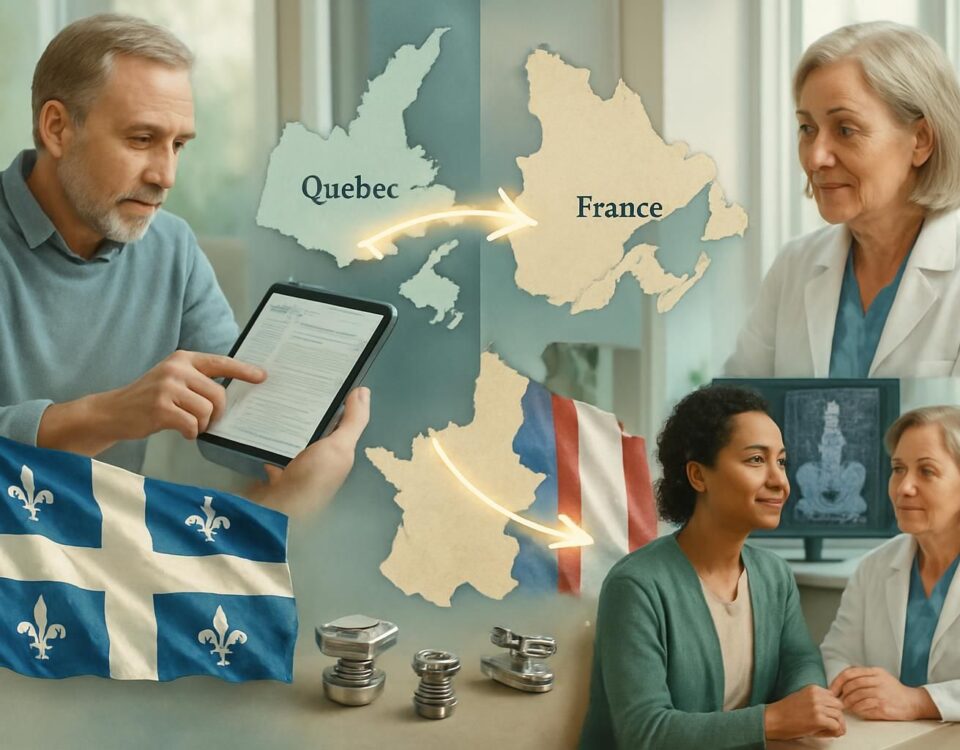
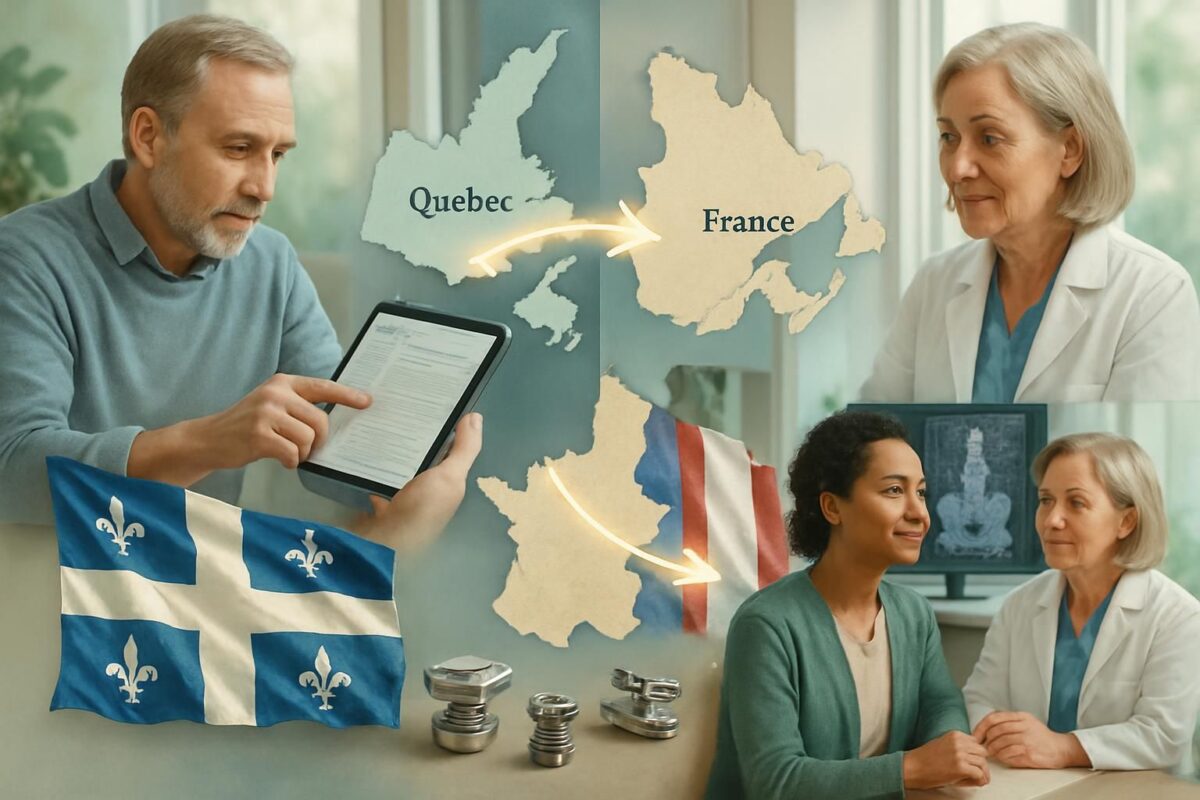
The journey of the Canadian patient suffering from complex low back pain: towards an intervention in France fully illustrates the importance of global, coordinated support. Each player in the network has a precise role to play, guaranteeing a smooth, safe workflow.
The first step consists of a in-depth assessment provided by Dr. Sylvain Desforges via the TAGMED clinics in Terrebonne and Montreal, which specialize in conservative treatments of neurovertebral decompression robotics. This phase maximizes the use of non-surgical solutions before considering intervention. For initial evaluation or neurovertebral decompression treatment, contact Dr Sylvain Desforges and his team at TAGMED.
The patient then receives personalized guidance from the company Cross which selects the appropriate surgeon and French operating center, based on the nature of the pathology and the most effective surgical technique. Franchir also organizes the entire stay, including travel and accommodation, to offer a reassuring and logistically optimal framework.
After the operation, post-operative follow-up is entrusted to Neurotherapy Montreal, specializing in patient support and spinal rehabilitation. This follow-up guarantees personalized care throughout the convalescence period, and facilitates a gradual return to daily and professional activities.
This seamless orchestration between French surgical expertise, Canadian preoperative conservative care and dedicated rehabilitation ensures more efficient, rapid and safe care overall. Each partner, from Center du Dos Sain à Spine Plus Surgery, This contributes to improved results and patient satisfaction.
Innovative techniques and specific implants available in France
France is at the forefront of surgical approaches to the spine, particularly for lower back surgery. Numerous innovative techniques have been developed to reduce risks, improve post-operative comfort and enhance recovery. The integration of high-performance implants also enhances the quality of results.
The most common techniques include :
Endoscopic surgery This minimally invasive technique uses small incisions and an endoscope to minimize tissue trauma. It is particularly suitable for decompression narrow lumbar canals and the management of herniated discs.
Lumbar arthrodesis Fusion: an operation to fuse two or more vertebrae to correct instability. With modern implants and percutaneous techniques, success rates and recovery are optimized.
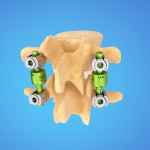
Dynamic stabilization , with implants such as TOPS or Intraspine, offers an alternative to conventional fusion, retaining some segmental mobility and reducing mechanical stress at adjacent levels.
Disc prostheses Intervertebral discs: used to replace an intervertebral disc, they restore the disc space and preserve mobility, reducing wear and tear on the other segments.
These interventions are adapted according to the eligibility criteria assessed by the network of Franco-Canadian partners, thus ensuring that every patient benefits from best suited to its specific condition.
Mobilité préservée, réduction des douleurs adjacentes
Disc prostheses
Disques artificiels certifiés
Discopathie dégénérative
Maintien de la mobilité, meilleure qualité de vie
Le recours à ces innovations, toujours associé à un suivi de pointe via Neurotherapy Montreal et une organisation rigoureuse par la société Cross, assure aux patients canadiens une prise en charge optimale, sécurisée et personnalisée.
Questions fréquentes sur la réussite de la chirurgie du bas du dos et parcours patient transatlantique
Quels sont les délais habituels pour une intervention en France ?
Le parcours complet, depuis l’évaluation initiale jusqu’à la chirurgie, est organisé pour être aussi rapide qu’efficace, souvent dans un délai de 4 à 8 semaines, en tenant compte des examens préalables et de la planification logistique.
Quel est le coût moyen d’une lower back surgery en France pour un patient canadien ?
Les tarifs varient selon la technique et la durée d’hospitalisation, mais restent compétitifs par rapport au Canada, notamment grâce à une organisation optimisée via Franchir et SOS Medical Tourism.
Comment est organisé le suivi post-opératoire au retour au Canada ?
Le suivi est assuré par Neurothérapie Montréal, qui propose un accompagnement personnalisé adapté à chaque cas, favorisant une réhabilitation vertebrale efficace.
Quelles sont les conditions d’éligibilité à la chirurgie du bas du dos ?
Chaque patient doit bénéficier d’une évaluation complète pour vérifier la présence d’une lésion anatomique corrigible chirurgicalement. Le Dr Sylvain Desforges et son équipe chez TAGMED supervisent l’évaluation et les traitements conservateurs spécialisés.
Quelles sont les principales complications à anticiper ?
Les complications fréquentes incluent un échec de la fusion, fibrose épidurale, ou décompression inadéquate. Le suivi postopératoire et la réhabilitation sont essentiels pour limiter ces risques.
Ces questions et réponses s’inscrivent dans une démarche claire visant à informer et rassurer les patients, tout en soulignant la qualité de l’organisation franco-canadienne en matière de spinal surgery.
Dr. Sylvain Desforges is the founder of SOS Tourisme Médical. With over 35 years of expertise in evaluating spinal disorders and supporting patients with chronic spinal conditions, Dr. Sylvain Desforges has established himself as a leading authority for Canadians seeking access to innovative back and neck surgery in France. Renowned for his clinical rigor and teaching skills, he performs in-depth evaluations and supervises conservative treatments—particularly non-surgical spinal decompression therapy—at TAGMED, prior to any surgical procedure. Through SOS Tourisme Médical, he coordinates a network of complementary partners:Neurothérapie Montréal, for specialized preoperative examinations and postoperative follow-up (neuromtl.com), Franchir, for referrals to the best spine centers and surgeons in France, as well as complete logistical organization of the stay (franchir.eu),and TAGMED for initial assessment and conservative treatments (cliniquetagmed.com). Every day, he is committed to informing, guiding, and supporting patients at every stage: understanding techniques and implants (TOPS™, Intraspine®, disc prostheses, etc.), explaining eligibility criteria, administrative procedures, practical organization, and follow-up until their return to Quebec. Its goal: to guarantee a fast, personalized, and transparent care pathway, in complete safety, to enable everyone to regain mobility and quality of life thanks to advances in spinal surgery. For more information or for a personalized assessment, discover the pathway offered by SOS Tourisme Médical or contact us directly via the online form.



Le rôle de récupération fonctionnelle par paliers dans un parcours réussi
Learn more