

Franchir l'Atlantique pour soulager votre dos
Chez SOS Tourisme Médical, nous avons une mission claire : offrir aux patients québécois souffrant de pathologies du dos un accès privilégié aux meilleures innovations chirurgicales disponibles en France — des solutions souvent indisponibles au Canada ou non remboursées ici. Notre objectif est de permettre à chaque patient de retrouver sa mobilité, sans douleur, grâce aux technologies les plus avancées en chirurgie du rachis.
Prothèses - Implants "Motion"
1
TOPS™ system
The TOPS™ system is designed to stabilize the spine after lumbar decompression surgery, particularly for the treatment of spinal stenosis and degenerative spondylolisthesis.
2
IntraSPINE®
Intraspine® is a dynamic stabilization system designed to treat chronic low-back pain caused by degeneration of the discs in the lumbar region (lower back).
3
CP-ESP®
4
LP-ESP®
5
B-Dyn™
Temps de lecture : 12 min
Résumé de: Chirurgie « Motion » en France : préservez la mobilité naturelle de votre colonne vertébrale
La chirurgie Motion offre une alternative innovante à la fusion vertébrale traditionnelle, permettant de stabiliser le dos sans le rigidifier. Grâce à des techniques mini-invasives et des implants dynamiques, cette approche préserve la mobilité naturelle de la colonne vertébrale, offrant ainsi un soulagement durable de la douleur. Les patients québécois peuvent bénéficier de cette expertise en France, où des centres d'excellence pratiquent ces interventions depuis plus de vingt ans.
Top 5 Tips to Remember
- La chirurgie Motion préserve 60-80 % de la mobilité naturelle.
- Accès à des implants de pointe marqués CE avant leur diffusion au Canada.
- Récupération rapide avec un séjour hospitalier de 24 à 48 heures.
- Moins de risques de complications à long terme par rapport à l'arthrodèse.
- Parcours clé en main pour les patients québécois avec SOS Tourisme Médical.
Listen to our Podcast
Ce podcast présente la chirurgie Motion, une approche révolutionnaire de la chirurgie de la colonne vertébrale qui préserve la mobilité naturelle contrairement à la fusion classique. Il met […]
Chirurgie « Motion » en France : préservez la mobilité naturelle de votre colonne vertébrale
There chirurgie Motion réunit toutes les techniques destinées à stabiliser votre dos sans le rigidifier – l’exact opposé de l’arthrodèse classique. Grâce à des implants dynamiques ou élastiques et à des approches mini-invasives, elle soulage durablement the pain tout en conservant flexion, extension et rotation.
En France, plusieurs centres d’excellence pratiquent ces interventions depuis plus de vingt ans ; SOS Medical Tourism vous y donne accès dans un parcours clé en main, conçu spécialement pour les patients québécois.

1. Qu’est-ce que la chirurgie Motion ?
| Arthrodèse « classique » | Motion Surgery | |
|---|---|---|
| Principle | Fusion définitive de vertèbres contiguës | Stabilisation dynamique ou remplacement discal |
| Mobilité segmentaire | Supprimée | Préservée (60 – 80 % du mouvement naturel) |
| Risques à long terme | Dégénérescence des segments voisins (ASD) | Charge biomécanique répartie |
| Convalescence | 3 – 6 mois | 4 – 8 semaines |
La philosophie Motion imite la biomécanique native : on remplace ou on soutient les structures abîmées (disque, facettes, ligaments) par des dispositifs élastiques, articulés ou hybrides capables d’absorber les contraintes sans bloquer votre dos.

2. Pourquoi choisir la France ?
En France, le caractère pionnier dans l’arthroplastie se reflète dans la courbe d’expérience exceptionnelle de ses équipes : les premiers disques artificiels y ont été posés dès le début des années 2000. Le recul clinique de plus de deux décennies permet d’affiner les indications, de prévenir les complications et d’améliorer les résultats fonctionnels – un niveau d’expertise difficilement égalé ailleurs.
L’environnement réglementaire français favorise l’innovation responsable. Le marquage CE et l’évaluation de la High Authority for Health imposent une double validation rigoureuse : seuls les dispositifs ayant prouvé innocuité et efficacité accèdent à la pratique courante. Les patients étrangers bénéficient ainsi d’un équilibre optimal entre nouveauté et sécurité.

3. Indications courantes
Ces indications couvrent la majorité des affections lombaires et cervicales invalidantes. En hernie récidivante, la prothèse discale restaure la hauteur du disque, ferme l’anneau fibreux et stabilise le segment ; on évite ainsi la fusion et on réduit drastiquement le risque d’un nouvel épisode compressif.
Pour la foraminal stenosis, la combinaison d’une décompression ciblée et d’un implant interlamaire souple libère la racine nerveuse tout en maintenant la lordose. Résultat : disparition plus rapide de la pain radiculaire et préservation des facettes adjacentes, gage d’une récupération musculaire harmonieuse.

4. Panorama des technologies françaises de préservation du mouvement
4.1 Prothèses discales élastiques
| Implant | Niveau | Particularité | Résultats ≥ 5 ans |
|---|---|---|---|
| LP-ESP® (FH Orthopedics) | Lombaire | Noyau viscoélastique, plateaux titane poreux | – 40 pts ODI, mobilité ≥ 75 % |
| Mobi-C® | Cervical | Double articulation mobile sans vis | Ré-op < 3 %, satisfaction 92 % |
| ProDisc L / C | Cervico-lombaire | Concept métal-PE éprouvé | Durabilité > 10 ans |
Le noyau élastique de la LP-ESP® absorbe micro-vibrations et contraintes de cisaillement ; les plateaux poreux favorisent l’ostéo-intégration sans vis. Les patients retrouvent une flexion continue et une répartition homogène des charges, même lors d’efforts sportifs.

There Mobi-C®, grâce à sa double surface de glissement, génère très peu de particules d’usure. Son implantation épargne l’os cortical et maintient l’angle discal ; les migraines cervicogènes s’en trouvent souvent atténuées, améliorant bien plus que la seule douleur rachidienne.
4.2 Stabilisations dynamiques postérieures
| Système | Fonction | Atout clé |
|---|---|---|
| TOPS™ | Articulation postérieure complète | Mouvement conservé (flexion-extension & rotation) |
| B-Dyn® | Tiges hybrides rigide/élastique | Amortissement des pics de charge |
| Dynesys® | Câbles PEEK + spacers | 20 ans de recul clinique |
The TOPS™ agit comme une charnière intelligente qui guide la cinématique vertébrale sans la contraindre ; idéal pour les métiers physiques, il permet un retour au plein effort sans crainte de blocage.
The B-Dyn® combine rigidité et élasticité : stabilité suffisante pour la consolidation, flexibilité pour protéger les segments voisins. Une transition douce qui séduit les patients jeunes et sportifs.
4.3 Cales interlamaires souples
L’IntraSPINE® amortit les chocs et réduit la pression facettaire ; réversible, il peut être retiré si votre pathologie évolue, ce qui préserve toutes les options futures.
Coflex® and Superion® sont posés sous anesthésie locale via une incision centimétrique ; la plupart des patients marchent le jour même et embarquent pour le Québec en moins d’une semaine.

| Techniques de Motion : Vue Détaillée | |||
|---|---|---|---|
| INTRASPINE | B-Dyn | Prothèse LP-ESP | TOPS |
| Implant silicone médical (cale souple) interlaminar. Délabrement musculaire faible.
| Système vis pédiculaires avec tige dynamique. Ouverture plus large, impact musculaire.
| Prothèse de disque (Elastic Spine Prothesis). Voie antérieure rétropéritonéale.
| Prothèse de l’arc postérieur. Implant unique, très technique.
|
5. Bénéfices cliniques validés
There mobilité préservée maintient la proprioception vertébrale ; l’équilibre postural s’améliore et le risque de chute diminue, particulièrement chez les plus de 60 ans.
Sur le plan socio-économique, une recovery raccourcie signifie moins de jours d’arrêt et un impact positif sur la santé mentale, l’estime de soi et la vie familiale.

6. Votre parcours avec SOS Tourisme Médical
6.1 Avant le départ
Notre réseau de radiologues certifiés livre un second regard expert en 48 h, évitant l’aggravation de votre pathologie durant l’attente.
La réunion transatlantique confronte l’expérience nord-américaine et l’innovation européenne pour une décision thérapeutique doublement validée.
6.2 En France
Un accueil sans stress réduit l’anxiété pré-opératoire, facteur majeur de douleur post-chirurgie et de retard cicatriciel.
There surgery guidée par robot et imagerie 3D limite la dissection musculaire, donc moins d’opioïdes, un réveil plus vif et un risque infectieux abaissé.
6.3 Rééducation & suivi
Le mix présentiel/vidéo assure une continuité sans faille ; même les jours sans séance, des tutoriels interactifs guident vos exercices.
La garantie 12 mois couvre complications et bilan biomécanique de contrôle ; vous avancez avec l’assurance d’un filet de sécurité jusque dans la phase tardive.

7. Témoignages de patients québécois
« LP-ESP® : deux mois après l’opé j’étais sur les sentiers des Laurentides ! » – Julie, 44 ans
« TOPS™ m’a rendu la souplesse pour rejouer au hockey léger » – Luc, 52 ans
« IntraSPINE® : vol retour dix jours plus tard, douleurs divisées par dix » – Nadia, 57 ans
8. Foire aux questions (FAQ)
Les implants déclenchent-ils les détecteurs de métaux ?
Non : matériaux compatibles aéroport.
Pourrai-je passer une IRM ensuite ?
Oui, tous les dispositifs sont IRM-compatibles jusqu’à 3 T.
Quand pourrai-je retravailler ?
En général entre 4 et 8 semaines, parfois moins en télétravail.
9. Passez à l’action !
There chirurgie Motion est l’alternative moderne, flexible et durable à la fusion vertébrale. Grâce à SOS Medical Tourism et au réseau français, cette option est désormais accessible aux patients québécois :
Your most frequently asked questions (FAQ)
Surgery - Motion
CP-ESP® prosthesis implants are designed to mimic the natural mechanics of the spine, making them ideal for treating conditions such as moderate lumbar spinal stenosis.
Unlike fusion, Motion surgery with CP-ESP® prosthesis does not block the vertebrae, but allows controlled movement in flexion, extension, rotation and lateral tilt.
Thanks to B-Dyn® implants, patients retain a functional range of motion while stabilizing the operated area and relieving nerve compression.
Convalescence generally lasts between 4 and 8 weeks.
Yes, it is often proposed as a more physiological alternative to fusion.
No, it is firmly attached to the vertebrae to reproduce movement without instability.
Cervical disc prosthesis implants are designed to mimic the natural mechanics of the spine, making them ideal for treating conditions such as isolated disc degeneration.
Unlike fusion, Motion surgery with LP-ESP® prosthesis does not block the vertebrae, but allows controlled movement in flexion, extension, rotation and lateral tilt.
In patients with moderate lumbar stenosis, Motion surgery can relieve pain while avoiding the side-effects associated with loss of mobility.
Thanks to the CP-ESP® prosthesis, patients retain a functional range of motion while stabilizing the operated area and relieving nerve compression.
Yes, after 3 to 6 months, depending on activity and recovery.
This device allows controlled movement of the spine while ensuring its stability.
In the event of failure, fusion can be performed secondarily.
Thanks to the CP-ESP® prosthesis, patients retain a functional range of motion while stabilizing the operated area and relieving nerve compression.
Motion surgery with LP-ESP® prosthesis stabilizes the spine while preserving natural mobility, particularly useful for patients with herniated discs with mobile segments.
Motion surgery with dynamic, non-fusion implants can stabilize the spine while preserving natural mobility, particularly useful for patients with preserved segmental mobility.
Unlike fusion, Motion surgery with TOPS™ system does not lock the vertebrae but allows controlled movement in flexion, extension, rotation and lateral tilt.
Yes, but it can be removed or replaced in the event of complications.
Between €15,000 and €30,000 depending on the center, implant and type of hospitalization.
Yes, it requires a general anaesthetic for maximum comfort and safety.
Implants like the TOPS™ system are designed to mimic the natural mechanics of the spine, which is ideal for treating conditions such as symptomatic lumbar disc disease.
Thanks to a dynamic, non-fusional implant, patients retain a functional range of motion while stabilizing the operated area and relieving nerve compression.
Unlike fusion, Motion surgery with CP-ESP® prosthesis does not block the vertebrae, but allows controlled movement in flexion, extension, rotation and lateral tilt.
Unlike fusion, Motion surgery with dynamic non-fusion implants does not block the vertebrae, but allows controlled movement in flexion, extension, rotation and lateral tilt.
Yes, modern implants like TOPS™ or LP-ESP are MRI compatible under certain conditions.
Approximately 15 to 20 years, depending on clinical studies and the patient's lifestyle.
On average 2 to 5 days, depending on the approach and post-operative recovery.
Thanks to cervical disc prosthesis, patients retain a functional range of motion while stabilizing the operated area and relieving nerve compression.
Motion surgery with LP-ESP® prosthesis stabilizes the spine while preserving natural mobility, particularly useful for patients with moderate lumbar spinal stenosis.
Unlike fusion, Motion surgery with dynamic non-fusion implants does not block the vertebrae, but allows controlled movement in flexion, extension, rotation and lateral tilt.
This is a surgical procedure designed to preserve the natural movement of a vertebral segment using a dynamic implant or disc prosthesis.
Yes, because of the higher cost of dynamic or prosthetic implants.
Yes, if there are no specific contraindications, such as severe osteoporosis.
Some are customized in 3D, others are standard but adapted to the patient's anatomy.
Unlike fusion, Motion surgery with cervical disc prosthesis does not block the vertebrae, but allows controlled movement in flexion, extension, rotation and lateral tilt.
Motion surgery with LP-ESP® prosthesis stabilizes the spine while preserving natural mobility, particularly useful for patients with ASD (adjacent segment disease).
Implants like B-Dyn® are designed to mimic the natural mechanics of the spine, making them ideal for treating conditions such as moderate lumbar spinal stenosis.
Motion surgery preserves the mobility of the operated segment, while fusion permanently blocks the segment.
Sometimes yes, in particular to treat an adjacent segment or correct a post-operative defect.
Yes, with cervical prostheses such as CP-ESP or Prestige.
Thanks to the TOPS™ system, patients retain a functional range of motion while stabilizing the operated area and relieving nerve compression.
Thanks to the TOPS™ system, patients retain a functional range of motion while stabilizing the operated area and relieving nerve compression.
In patients with preserved segmental mobility, Motion surgery can relieve pain while avoiding the side-effects associated with loss of mobility.
To treat herniated discs, low-grade spondylolisthesis, or disc disease without major instability.
Yes, it reduces stress on neighboring levels, unlike fusion.
Yes, physiotherapy is recommended to optimize functional recovery.
Unlike fusion, Motion surgery with cervical disc prosthesis does not block the vertebrae, but allows controlled movement in flexion, extension, rotation and lateral tilt.
Motion surgery with cervical disc prosthesis can stabilize the spine while preserving natural mobility, particularly useful for patients with incipient facet arthrosis.
Unlike fusion, Motion surgery with CP-ESP® prosthesis does not block the vertebrae, but allows controlled movement in flexion, extension, rotation and lateral tilt.
Disc prostheses (ESP, LP-ESP) or dynamic systems such as TOPS™, IntraSPINE® or BDyn.
No, it requires specific training and experience in dynamic implants.
Yes, this is called hybrid mounting.
Motion surgery with the B-Dyn® implant stabilizes the spine while preserving natural mobility, particularly useful for patients with isolated disc degeneration.
Motion surgery with dynamic non-fusion implants can stabilize the spine while preserving natural mobility, particularly useful in patients with early facet osteoarthritis.
LP-ESP® prosthesis implants are designed to mimic the natural mechanics of the spine, making them ideal for treating conditions such as early facet osteoarthritis.
Yes, it represents a modern evolution aimed at preserving spinal biomechanics.
Yes, with imaging tests to check implant position and mobility.
Discogenic pain, good mobility, no severe instability, good bone condition.
Implants like the TOPS™ system are designed to mimic the natural mechanics of the spine, which is ideal for treating conditions such as symptomatic lumbar disc disease.
Motion surgery with CP-ESP® prosthesis stabilizes the spine while preserving natural mobility, particularly useful for patients with herniated discs with mobile segments.
Thanks to the CP-ESP® prosthesis, patients retain a functional range of motion while stabilizing the operated area and relieving nerve compression.
Yes, it replaces the damaged disc while maintaining spinal movement.
In France, it is not systematically reimbursed, as some implants are not on the reimbursement list.
TOPS™, LP-ESP, CP-ESP, IntraSPINE®, BDyn.
Cervical disc prosthesis implants are designed to mimic the natural mechanics of the spine, making them ideal for treating conditions such as ASD (adjacent segment disease).
Implants like the TOPS™ system are designed to mimic the natural mechanics of the spine, which is ideal for treating conditions such as herniated discs with mobile segments.
Motion surgery with cervical disc prosthesis can stabilize the spine while preserving natural mobility, particularly useful for patients with moderate lumbar spinal stenosis.
Yes, it's a posterior arthroplasty that restores mobility while stabilizing the operated area.
It is generally reserved for patients between the ages of 30 and 70 with good bone quality.
Yes, the implants are radiopaque and image-controllable.
In patients suffering from isolated disc degeneration, Motion surgery can relieve pain while avoiding the side effects associated with loss of mobility.
LP-ESP® prosthesis implants are designed to mimic the natural mechanics of the spine, making them ideal for treating conditions such as early facet osteoarthritis.
Thanks to the CP-ESP® prosthesis, patients retain a functional range of motion while stabilizing the operated area and relieving nerve compression.
Preservation of movement, reduced risk of degeneration of adjacent segments, improved quality of life.
Very good in clinical studies, with a significant reduction in pain and functional disability.
Yes, infiltrations are part of the conservative treatment prior to surgery.
Thanks to cervical disc prosthesis, patients retain a functional range of motion while stabilizing the operated area and relieving nerve compression.
Thanks to a dynamic, non-fusional implant, patients retain a functional range of motion while stabilizing the operated area and relieving nerve compression.
Motion surgery with TOPS™ system stabilizes the spine while retaining natural mobility, particularly useful in patients with grade I spondylolisthesis.
Implant displacement, premature wear, persistent pain, or need for fusion conversion.
Yes, after 2 to 4 weeks, depending on recovery and cessation of painkillers.
Yes, it's even recommended to confirm the indication.
Unlike fusion, Motion surgery with dynamic non-fusion implants does not block the vertebrae, but allows controlled movement in flexion, extension, rotation and lateral tilt.
LP-ESP® prosthesis implants are designed to mimic the natural mechanics of the spine, making them ideal for treating conditions such as ASD (adjacent segment disease).
Unlike fusion, Motion surgery with dynamic non-fusion implants does not block the vertebrae, but allows controlled movement in flexion, extension, rotation and lateral tilt.
Yes, but it depends on the condition of each segment and the technique used.
A return to work is possible within 4 to 8 weeks, depending on the position held.
Rare complications can occur, such as loosening or wear of the implant.
In patients with Grade I spondylolisthesis, Motion surgery can relieve pain while avoiding the side effects associated with loss of mobility.
In patients suffering from ASD (adjacent segment disease), Motion surgery can relieve pain while avoiding the side effects associated with loss of mobility.
For patients suffering from herniated discs with mobile segments, Motion surgery can relieve pain while avoiding the side-effects associated with loss of mobility.
As with any surgery, post-operative pain is to be expected, but is generally moderate and well-controlled.
MRI, CT scan, dynamic X-rays and sometimes an EOS scan.
Yes, subject to the type of implant used and MRI safety conditions.
Motion surgery with cervical disc prosthesis can stabilize the spine while preserving natural mobility, particularly useful for patients with preserved segmental mobility.
Thanks to the CP-ESP® prosthesis, patients retain a functional range of motion while stabilizing the operated area and relieving nerve compression.
For patients suffering from herniated discs with mobile segments, Motion surgery can relieve pain while avoiding the side-effects associated with loss of mobility.
On average 60 to 90 minutes per level treated.
Between 80 and 95 % depending on indications and implant type.
It allows them to maintain their range of movement and a more dynamic lifestyle.
References
Cervical or lumbar surgery? Specify the area!
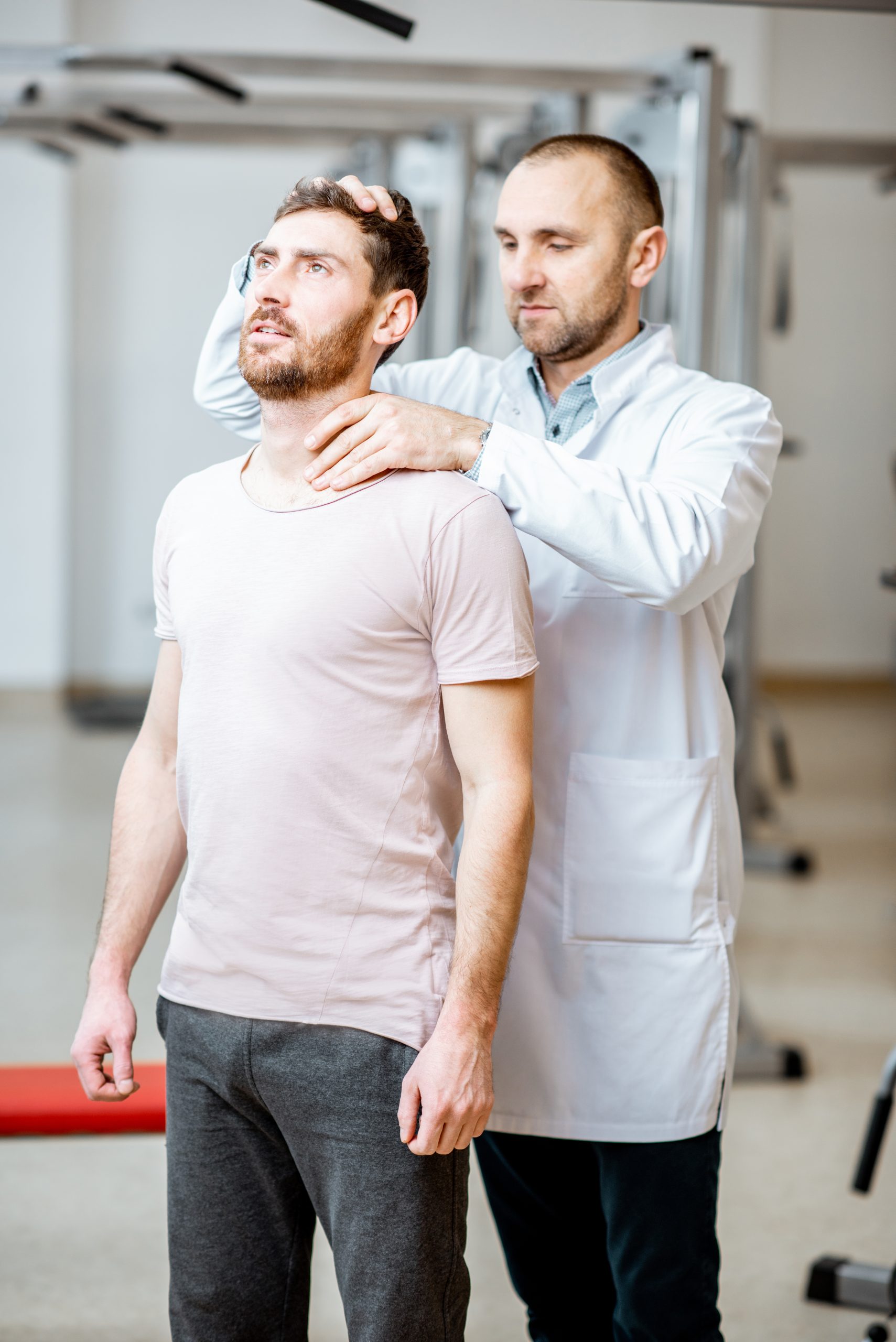
Cervical Surgery
In France, cervical surgery includes arthrodesis, disc replacement, minimally invasive endoscopy, and decompressive foraminotomy, effectively correcting hernias, stenosis, and painful discogenic instability.
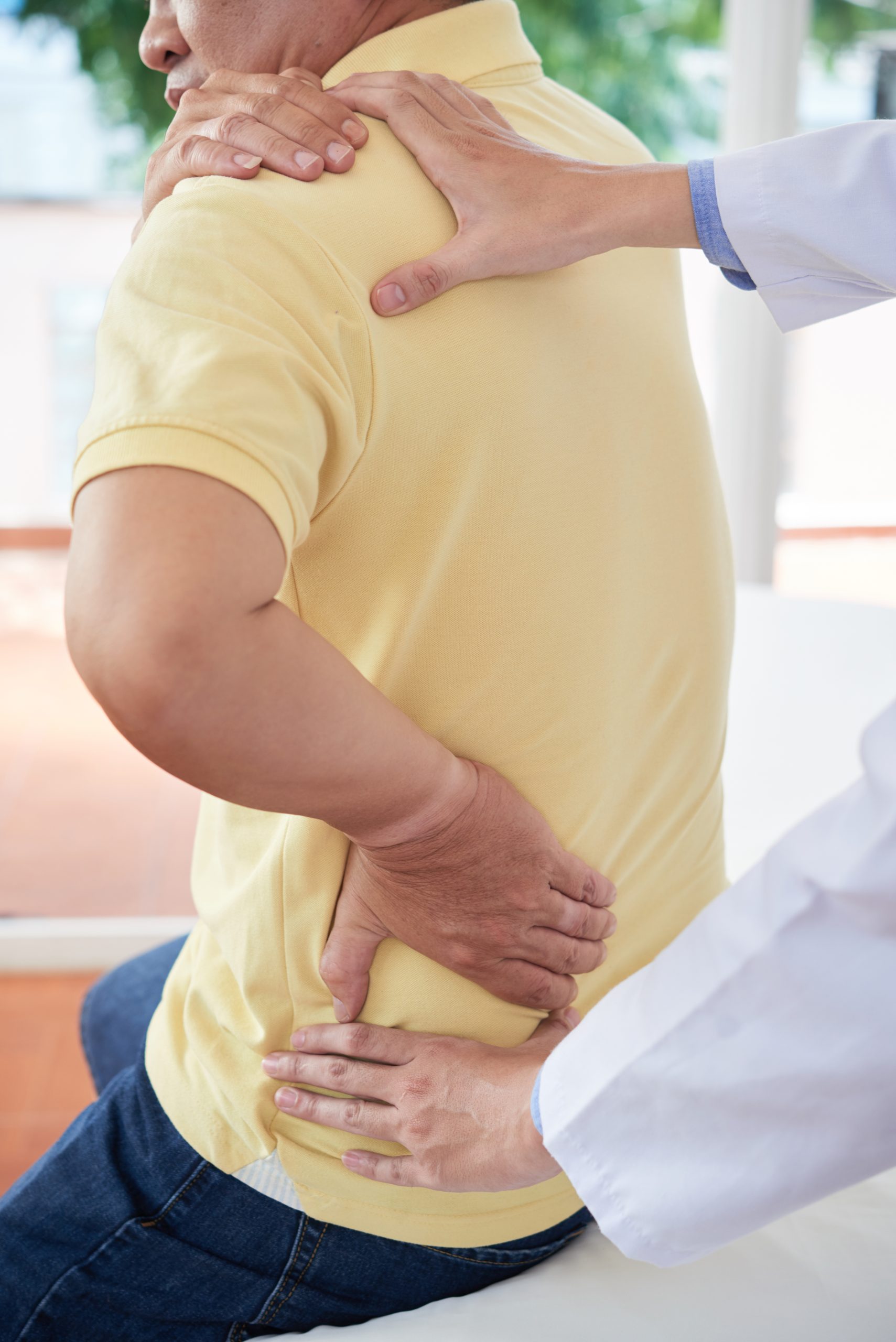
Lumbar Surgery
In France, lumbar surgery offers arthrodesis, disc replacement, minimally invasive endoscopy, TLIF/ALIF fusion, laminectomy decompression, treating hernias, stenosis, and disabling spondylolisthesis.
Les Étapes Clés d'Aide à la Décision Chirurgicale de la colonne vertébrale
1
What Type of Surgery?
Décompression pour libérer les nerfs avec ou sans fusion pour stabiliser les vertèbres.
Le choix dépend de la pathologie et de l'état général du patient.
2
Quelle Voie d'Abord ?
Antérieure (par l'avant), postérieure (par l'arrière) ou latérale (par le côté).
Chaque approche offre un accès différent aux structures vertébrales.
3
Quel Type d'Implants ?
Choix de la technique cirurgicale cervicale
1
Choix Type Chirurgie
LIBÉRATION avec MOTION (préservation du mouvement).
Alternative: FUSION (blocage) pour stabiliser le segment cervical.
2
Choix Voie d'Abord
Antérieure: approche principale pour la chirurgie cervicale.
Postérieure: utilisée rarement dans des cas spécifiques.
3
Choix des Implants
4
Specific Techniques
FUSION: approches adaptées pour l'arthrodèse cervicale.
MOTION: techniques préservant la fonctionnalité naturelle du rachis cervical.
Choix de la technique cirurgicale lombaire
1
Choix Type Chirurgie
Simple libération nerveuse ou préservation du mouvement (MOTION).
Alternative: merger vertébrale pour stabiliser le segment pathologique.
2
Choix Voie d'Abord
Postérieure: accès direct aux éléments postérieurs de la colonne.
Antérieure or lateral: abord moins invasif pour certaines pathologies.
3
Choix des Implants
4
Specific Techniques
Fusion: LIF, PLIF, TLIF, XLIF selon l'accès requis lors de la chirurgie.
Motion: B-DYN, TOPS, ESP pour maintenir la fonctionnalité naturelle.
3 Types de Chirurgie : Libération
1
Simple
Préservation de la mobilité sans implant. Préserve les étages adjacents.
2
Merger
Blocage définitif du segment. Implants multiples. Effet sur étages adjacents.