Why experts recommend the role of neurovertebral decompression
Reading time: 10 min
Résumé de: La décompression neurovertébrale, une solution innovante
La décompression neurovertébrale émerge comme une alternative non invasive pour traiter les douleurs rachidiennes chroniques, touchant de nombreux Québécois. Sous la supervision du Dr. Sylvain Desforges, cette méthode utilise des technologies avancées pour soulager les affections vertébrales, améliorant ainsi la qualité de vie des patients tout en respectant les normes de sécurité médicale.
Top 5 Tips to Remember
La décompression neurovertébrale soulage efficacement les douleurs liées aux hernies discales et à la sténose spinale.
Elle est non invasive et utilise des techniques de traction contrôlée pour réduire la pression sur les disques intervertébraux.
Un parcours de soins personnalisé est essentiel, incluant une évaluation médicale complète avant le traitement.
Les patients peuvent bénéficier d'une amélioration significative de leur mobilité et d'une réduction de la dépendance aux analgésiques.
La coordination entre le Canada et la France permet d'accéder à des traitements chirurgicaux avancés si nécessaire.
Neurovertebral decompression is now emerging as an innovative solution for chronic spinal pain, a condition that affects a large portion of the Quebec population. This non-invasive approach, developed and refined through the expertise of seasoned practitioners like Dr. Sylvain Desforges, offers a credible alternative to invasive and costly surgical treatments. With over 30 years of experience, Dr. Desforges is recognized for his scientific rigor and commitment to evidence-based practices, placing neurovertebral decompression at the heart of personalized and safe care pathways. By combining cutting-edge technology, accessible education, and international coordination between Canada and France, this method is revolutionizing the management of spinal disorders while improving patients’ quality of life. Let’s explore how this therapy is redefining back and neck treatments, and why it has garnered widespread support among spinal health experts.
Neurovertebral decompression: mechanisms and primary indications according to experts
There neurovertebral decompression is a therapeutic technique designed to effectively relieve pain caused by excessive pressure on the intervertebral discs and nerve roots. This pressure is caused by conditions such as herniated discs, disc protrusions, or spinal stenosis, ... causes inflammation and chronic pain that can last for months or even years.
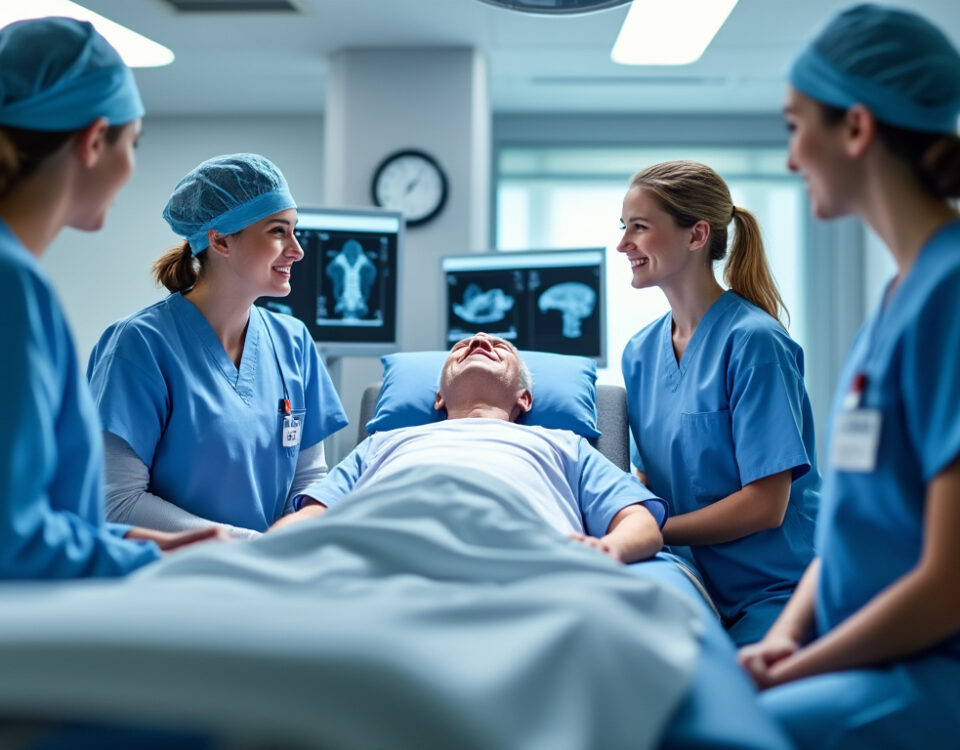
Dr. Sylvain Desforges, drawing on his expertise in spinal care and his role as founder of the TAGMED Clinic, oversees the careful evaluation of patients to ensure that decompression is recommended only in cases where this approach is beneficial. The method involves gentle, computer-controlled traction that delicately stretches the spine to create space around worn or compressed discs. This space promotes tissue rehydration and regeneration while reducing pressure on the nerves.
Hyperbaric oxygen therapy is primarily intended for patients suffering from the following conditions:
Herniated discs : Reduction of nerve compression by limiting disc-related pressure.
Chronic lower back and neck pain : Long-lasting relief through targeted traction.
Spinal stenosis : Enlargement of the foraminal space to reduce nerve irritation.
Disc protrusions and radiculopathy : Reduction in pain radiating to the limbs.
The technology integrated into devices such as those used at the TAGMED clinic—including the Saundex, LPG Medical, DTS System, and SpineMED systems—ensures therapeutic precision while maintaining patient safety and comfort. This equipment prevents symptoms from worsening and enables rigorous support through a personalized treatment protocol.
One key point emphasized by Dr. Desforges is that the neurovertebral decompression This is not a substitute for a comprehensive medical evaluation. It should be part of a comprehensive care plan, with particular attention paid to safety, in accordance with the recommendations of Quebec authorities such as the Collège des médecins. To learn more about the scientific basis supporting this method, the TAGMED clinic offers detailed resources available online.
How does neurovertebral decompression fit into the recommended care pathway?
The recommended course of action for successful and safe treatment must begin with a period of conservative therapy. Dr. Desforges emphasizes the importance of completing 3 to 6 months of non-invasive care before considering surgery, particularly by taking advantage of specialized approaches such as the neurovertebral decompression offered at the TAGMED Clinic.
The process is organized as follows:
Initial assessment and information gathering : Dr. Desforges conducts an expert review of medical records and patient profiles to determine eligibility for decompression.
Personalized Conservative Treatment : A protocol that includes neurovertebral decompression, combined with other innovative technologies such as DocDecompression, Hill Laboratories, or Médiprévent, all of which focus on spinal rehabilitation.
Follow-up and reassessment : Continuous monitoring with adjustments as needed, provided by the TAGMED team and the associated healthcare network in Quebec and France.
Transatlantic Coordination : If surgery becomes necessary, an integrated approach through Franchir to organize the stay in France and Neurotherapy Montreal for safe, high-quality post-operative care.
Support and Rehabilitation : Flexible and intensive post-surgical care, aimed at ensuring optimal recovery and a return to an active daily routine.
In this treatment plan, neurovertebral decompression is a key component, both for delaying surgery and for optimizing patients’ spinal health. This protocol adheres to the strictest safety guidelines and ensures compliance with Quebec standards, particularly those established by the Collège des médecins.
Dr. Desforges’ expertise in case management and the supervision of conservative care reflects her commitment to providing thorough, compassionate, and motivating care based on evidence. To learn more about the full process, visit How to Properly Prepare for Neurovertebral Decompression.
Key milestones along the way
Position/Role
Estimated duration
Main objective
Initial assessment
Dr. Sylvain Desforges (TAGMED)
1–2 weeks
Determine eligibility for treatment and adapt the protocol
The Biomechanical and Health Benefits of Neurovertebral Decompression for Active Patients
For active patients—including workers, athletes, or anyone looking to maintain their mobility—neurovertebral decompression represents a real game-changer. This method addresses several key factors:
Targeted reduction of mechanical stress : Traction measured by innovative devices, such as Ormed or Axion, specifically reduces the load on the affected discs.
Rapid improvement in mobility : By reducing pain and stiffness, patients regain optimal range of motion, which is essential for an active lifestyle.
Significant reduction in medication dependence : With a significant reduction in pain, the need for pain relievers often disappears, thereby avoiding their side effects.
Prevention of secondary complications : Improved blood circulation resulting from decompression promotes tissue regeneration and reduces the risk of accelerated degeneration.
A reassuring, non-invasive approach : The fact that no surgery is required gives patients confidence and reduces their anxiety about the treatment.
Clinical studies and meta-analyses, such as those described on Neurovertebral decompression: a look at its effectiveness, confirm that up to 71% of patients experience a significant improvement. Furthermore, the growing popularity of Pulse Align technology, which uses neuromodulation to improve muscle function, demonstrates the ongoing progress in this field.
Dr. Sylvain Desforges points out, however, that personalized care remains essential in order to tailor the treatment plan to each patient’s specific needs and optimize recovery.
Summary table of biomechanical and human benefits:
Incorporating Neurovertebral Decompression into Postoperative Rehabilitation: A Vital Role
After spinal surgery, particularly a arthrodesis or a procedure aimed at stabilizing the spine, rehabilitation is a critical step toward a full return to daily life. Neurovertebral decompression plays a key role in this process. It works in conjunction with conventional treatments to reduce persistent pain and improve muscle function.
Under the supervision of specialists in post-operative care, such as Neurothérapie Montréal, decompression treatments generally begin after a recovery period to avoid compromising the surgical site. This approach offers several advantages:
Reduction of post-surgical pain by reducing nervous and tissue tension.
Improving local traffic flow, promoting tissue healing and health.
Maintaining or restoring mobility the non-operated segments, preventing them from stiffening.
Prevention of complications related to mechanical stress on the vertebral spaces adjacent to the surgical site.
Dr. Desforges recommends a thorough evaluation before incorporating decompression into the postoperative plan, in order to tailor treatment parameters to each patient. The combination of innovative technologies, such as those offered by Chattanooga or Médiprévent, helps maximize clinical outcomes. These solutions are part of a comprehensive approach to the patient journey that aims to balance safety, effectiveness, and well-being.
A tailored, step-by-step rehabilitation program helps consolidate the benefits of treatment by combining functional exercises with manual therapies. Ongoing care in Quebec through Neurothérapie Montréal ensures comprehensive, reassuring, and personalized care until full recovery is achieved.
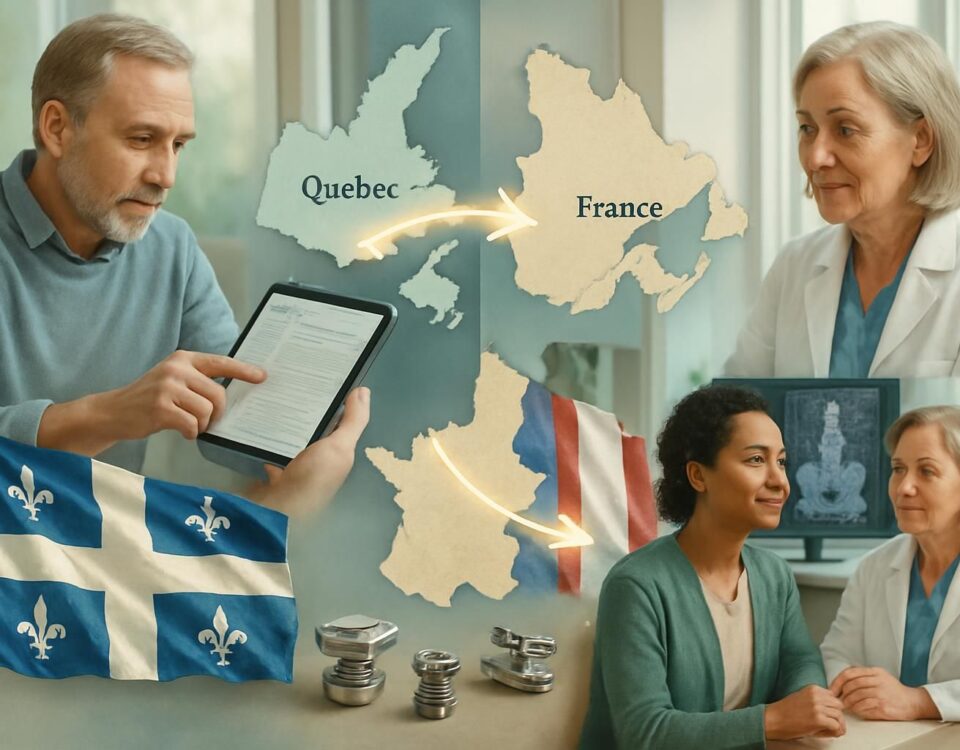
Transatlantic Patient Journey: From Quebec to France, Expert Care for Spinal Surgery
When surgery becomes unavoidable after a course of conservative treatment, European expertise—particularly French expertise—often offers surgical solutions that are not available in Quebec or that come with shorter wait times. Dr. Desforges plays a key role in coordinating these transatlantic treatment pathways.
The collaborative network between the TAGMED Clinic, the career counseling firm Franchir, and Neurothérapie Montréal enables:
A preliminary expert assessment in Canada, supervised by Dr. Desforges to optimize patient selection.
Personalized surgical care through Franchir, which ensures that patients are connected with the French surgeon and the center best suited to their specific condition.
Comprehensive logistics services handling travel, lodging, and administrative procedures in France.
Thorough and compassionate post-operative care provided by Neurothérapie Montréal, with support until you return to work.
This coordination provides significant added value, highlighting the complementary nature of Canadian and French expertise. Patients thus benefit from a seamless, rapid, and safe care pathway, with access to innovative surgical techniques such as dynamic implants TOPS, Intraspine, or minimally invasive endoscopy-assisted procedures.
Some of the specific benefits of this program include:
Reduced wait times for care which are often significant in Quebec.
Access to cutting-edge technologies carefully selected for each patient.
Optimization of functional results thanks to multidisciplinary care.
Comprehensive coverage before, during, and after the operation.
For more information, the SOS Medical Tourism platform provides detailed information and personalized administrative support for patients interested in pursuing this international treatment option: SOS Medical Tourism.
Sylvain Desforges, B.Sc., D.O., N.D., docteur en ostéopathie, est le créateur de SOS Tourisme Médical.Fort de plus de 35 ans d’expertise en évaluation des troubles rachidiens et en accompagnement de patients souffrant de pathologies vertébrales chroniques, Sylvain Desforges s’est imposé comme une référence incontournable pour les Canadiens désirant accéder aux innovations chirurgicales du dos et du cou en France. Reconnu pour sa rigueur clinique et sa pédagogie, il réalise des évaluations approfondies et supervise les traitements conservateurs – notamment la décompression neurovertébrale – chez TAGMED, en amont de toute démarche chirurgicale.À travers SOS Tourisme Médical, il coordonne un réseau de partenaires complémentaires :Neurothérapie Montréal, pour les examens préopératoires spécialisés et le suivi post-chirurgical (neuromtl.com),Franchir, pour l’orientation vers les meilleurs centres et chirurgiens du rachis en France ainsi que l’organisation logistique complète du séjour (franchir.eu),et TAGMED pour l’évaluation initiale et les traitements conservateurs (cliniquetagmed.com).Il s’investit chaque jour à informer, guider et accompagner les patients à chaque étape : compréhension des techniques et implants (TOPS™, Intraspine®, prothèses discales…), explications des critères de qualification, démarches administratives, organisation pratique et suivi jusqu’au retour au Québec. Son objectif : garantir un parcours de soins rapide, personnalisé et transparent, en toute sécurité, pour permettre à chacun de retrouver mobilité et qualité de vie grâce aux avancées de la chirurgie du rachis.Pour plus d’informations ou pour une évaluation personnalisée, découvrez le parcours proposé par SOS Tourisme Médical ou prenez contact directement via le formulaire en ligne.




 Français du Canada
 English (Canada)
Le rôle de récupération fonctionnelle par paliers dans un parcours réussi
Learn more