Résumé de: Les traitements du rachis : conservateurs ou chirurgicaux ?
La gestion des douleurs cervicales et lombaires au Québec soulève des questions cruciales sur l'efficacité des traitements conservateurs et chirurgicaux. Le Dr Sylvain Desforges, avec plus de 30 ans d'expérience, guide les patients dans un parcours personnalisé, intégrant des soins avancés à la Clinique TAGMED et des interventions chirurgicales en France. Ce modèle transatlantique assure un accès rapide à des techniques innovantes tout en respectant les normes de sécurité.
Top 5 Tips to Remember
Conservative treatments are often the first step in relieving spinal pain.
A thorough evaluation is essential to determine the need for surgery.
La décompression neurovertébrale est une méthode non chirurgicale efficace.
La France propose des techniques chirurgicales innovantes, souvent non disponibles au Canada.
Un suivi post-opératoire est crucial pour garantir une récupération optimale.
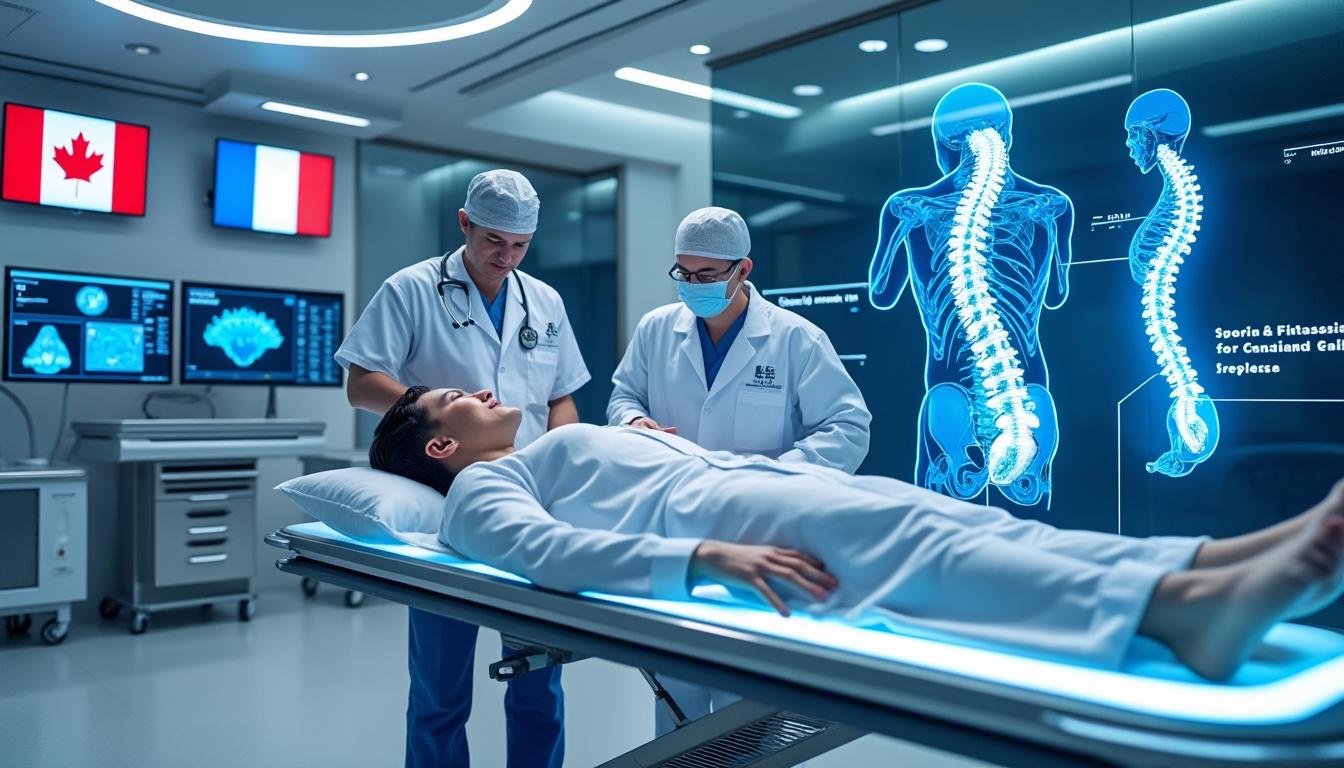
The question of the best treatments for spinal conditions, whether conservative or surgical, remains a key concern for many Quebec patients suffering from chronic neck or back pain. The path to recovery or a significant improvement in quality of life is often long and complex, requiring a rigorous and personalized approach. With over 30 years of experience in evaluating spinal conditions, Dr. Sylvain Desforges brings all his expertise to guide each patient through this crucial stage. As a key player in the Canada-France network, he ensures that each patient receives appropriate care, whether it be advanced conservative treatments at the TAGMED Clinic or innovative surgical procedures in France.
Due to constraints in Quebec regarding waiting times and the cost of private healthcare, many patients are now considering traveling across the Atlantic. This alternative provides rapid access to cutting-edge surgical techniques, while ensuring close follow-up care upon return to Canada. This international collaboration guarantees a safe, scientifically validated protocol that complies with the rules in force in Quebec and Canada.
Conservative treatments in spinal care: role and limitations in improving clinical outcomes
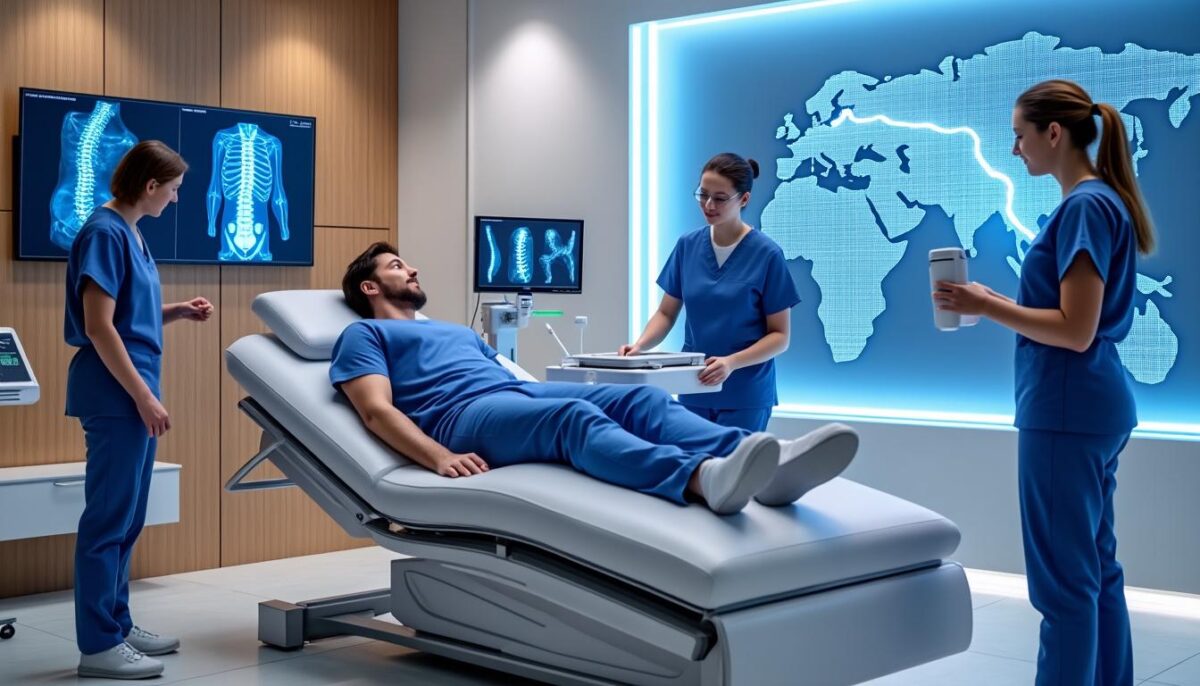
Conservative treatment is often the first step considered for patients suffering from spinal disorders. This approach combines various non-surgical modalities aimed at reducing pain, improving mobility, and promoting functional recovery. Among these therapies is computer-controlled neurovertebral decompression, available in particular at the TAGMED Clinic, plays an essential role. This targeted traction procedure, performed using state-of-the-art technology, works by decompressing the spinal discs and improving local circulation without resorting to surgery.
The Dr. Sylvain Desforges oversees the comprehensive assessment of patients and records to effectively refer them to these specialized conservative treatments. It is crucial to note that these interventions are not comparable to conventional physical therapy, but are based on rigorous scientific rigor and rigorous personalization of the therapeutic pathway.
Specific indications and benefits of advanced conservative care
The choice of conservative treatment is based on a thorough analysis of the symptoms, their progression, and any exclusions related to the patient's spinal condition. When implemented expertly, these treatments allow for:
A significant reduction in radicular or mechanical pain
Improved spinal mobility
Delaying or sometimes even avoiding surgery, thereby avoiding the risks associated with the operation
A better quality of life, by enabling a gradual return to professional and social activities
A concrete example is that of a patient presenting with herniated disc compressive lumbar pain, who after three months of robotic decompression at the TAGMED Clinic saw her pain greatly reduced, thus avoiding major surgery. This case perfectly illustrates Dr. Desforges' commitment to promoting evidence-based care, always in compliance with current Quebec standards on safety and ethics.
Limits of conservative treatments and the need for rigorous evaluation
Despite their recognized effectiveness, conservative treatments are not always sufficient. In some cases, characterized by rapid deterioration or intense pain that significantly impairs quality of life, surgery may be necessary. That is why regular follow-up and reassessment by Dr. Desforges allow for early detection of these situations and adaptation of the treatment plan accordingly.
Studies published over the past several years indicate that non-surgical treatment must be rigorously followed for a period of 3 to 6 months before surgery is considered. This essential step ensures that patients have benefited from all conservative options, including neurovertebral decompression, before moving on to more invasive treatment. More information on the comparison between conservative care and surgery is available in this article.Conservative treatments vs. surgery explained to Quebec patients.
The different techniques used in back and neck surgery in France: an innovative and personalized offering
When surgery is necessary, France offers Quebec patients access to cutting-edge procedures that are often unavailable or rare in Canada. France has developed minimally invasive and endoscopic techniques, traditional methods such as arthrodesis (fusion), and innovative approaches that preserve mobility, known as motion surgery or dynamic stabilization.
The most common types of surgery and their indications
Biomechanical correction without complete fusion, less invasive
Pain reduction and functional improvement
Endoscopic surgery
Herniated discs, nerve decompression
Less invasive, faster recovery
Less post-operative pain, quick return to normal activities
These different techniques are supported by a rigorous selection of innovative implants, particularly those offered by Cousin Spine or Premia Spine. This unique offering allows for better adaptation to the specific needs of each patient, promoting a better prognosis and recovery.
The key role of French and Quebec partners in the surgical process
The collaboration between the company Cross, which refers patients to the most suitable surgeon in France and takes care of all the arrangements for their stay, and Dr. Desforges' team, which conducts the initial assessment at TAGMED, create a smooth and secure process. In addition, Neurotherapy Montreal supports patients throughout their post-operative follow-up, ensuring personalized support upon their return to Canada.
Organization and management of the transatlantic patient journey for successful spinal surgery
For a Quebec patient, accessing surgery in France requires seamless coordination between several parties. It all starts with a thorough evaluation of the case by Dr. Sylvain Desforges and his team at the TAGMED Clinic, which recommend or do not recommend surgical intervention based on the response to specialized conservative treatments.
If surgery is considered, Franchir then steps in to coordinate referral to a specialist French surgical center, followed by scheduling appointments, organizing travel, accommodation, and logistics. Everything is put in place to minimize waiting times and ensure optimal comfort, thereby enhancing the safety and quality of the patient's journey.
One of the strengths of this protocol is the continuity of care provided at all stages: it begins with Dr. Desforges' expertise, continues with the surgical team in France, and is then extended with support from Neurotherapy Montreal and long-term rehabilitation care. This coordination not only ensures better recovery, but also reduces potential complications.
Key stages of the journey
Comprehensive initial assessment at TAGMED
Specialized conservative treatments lasting a minimum of 3 to 6 months
Joint decision to refer for surgery if necessary
Organization of the stay in France by Franchir, in conjunction with the surgical team
Surgical procedure using an appropriate technique
Close post-operative follow-up in France and then in Quebec by Neurothérapie Montréal
Personalized rehabilitation program and long-term follow-up
This model has already proven itself, ensuring optimized time between each phase and comprehensive care, avoiding breaks in the chain of care.
Why surgery should be considered after rigorous conservative treatment
A key question guiding Dr. Desforges in his assessment role is the need for an initial phase of conservative care. The spinal surgery, although effective, carries risks and requires rigorous preparation. Thus, non-surgical spinal decompression therapy, offered at the TAGMED Clinic, is a valuable prerequisite for optimizing clinical outcomes.
Numerous studies agree that patients who have completed between 3 and 6 months of specialized conservative treatment have a better prognosis, with fewer complications and faster recovery after any surgery. Ignoring this step can lead to rushed or unnecessary procedures, compromising quality of life.
For patients, it is therefore essential to understand that the decision to undergo surgery is not part of an immediate process, but rather part of a continuum in which non-surgical care is preferred. The approach remains humane, empathetic, and respectful of each individual. In addition, the quality of conservative care offered by TAGMED, with the expert validation of Dr. Desforges, is a real strength that guides patients toward an informed and personalized choice.
Comparison of conservative and surgical treatments: effectiveness, recovery, and clinical outcomes
It is natural for a patient to wonder how to choose between conservative care and surgery. To inform this choice, several fundamental aspects must be compared:
Short- and long-term effectiveness: Surgery often offers faster and more significant improvement in severe physical pain, while conservative treatments promote gradual progress, limiting surgical risks.
Recovery and complications: Postoperative recovery time can vary greatly depending on the technique used, with a risk of complications inherent in any invasive procedure. Conservative treatments, on the other hand, have a superior safety profile.
Overall functional prognosis: Non-surgical approaches aim for gradual functional restoration. Innovative surgical techniques, including dynamic implants such as TOPS or Intraspine, help preserve mobility, limiting the sequelae associated with conventional fusion.
Economic costs: Although France invests in high-end technologies and multidisciplinary care, surgical treatment there is a competitive option compared to the long waiting lists or expensive private treatment available in Quebec.
The table below illustrates these key comparisons between conservative treatments and surgery:
Criterion
Conservative treatments
Surgery (innovative techniques in France)
Access times
Immediate, at the TAGMED Clinic
Variable, optimized via Franchir, approximately 1-3 months
Pain improvement
Progressive, over 3-6 months
Fast, often immediate
Maintaining mobility
Complete
Possible with disc prostheses and dynamic stabilization
Risks and complications
Weak
Moderate, depending on the technique
Post-treatment follow-up
Insured by TAGMED
Complete follow-up with Neurotherapy Montreal
Choosing wisely between these options requires a clear understanding of the indications. The pivotal role played by Dr. Desforges' team serves as a valuable interface here.
Dr. Sylvain Desforges is the founder of SOS Tourisme Médical. With over 35 years of expertise in evaluating spinal disorders and supporting patients with chronic spinal conditions, Dr. Sylvain Desforges has established himself as a leading authority for Canadians seeking access to innovative back and neck surgery in France. Renowned for his clinical rigor and teaching skills, he performs in-depth evaluations and supervises conservative treatments—particularly non-surgical spinal decompression therapy—at TAGMED, prior to any surgical procedure. Through SOS Tourisme Médical, he coordinates a network of complementary partners:Neurothérapie Montréal, for specialized preoperative examinations and postoperative follow-up (neuromtl.com), Franchir, for referrals to the best spine centers and surgeons in France, as well as complete logistical organization of the stay (franchir.eu),and TAGMED for initial assessment and conservative treatments (cliniquetagmed.com). Every day, he is committed to informing, guiding, and supporting patients at every stage: understanding techniques and implants (TOPS™, Intraspine®, disc prostheses, etc.), explaining eligibility criteria, administrative procedures, practical organization, and follow-up until their return to Quebec. Its goal: to guarantee a fast, personalized, and transparent care pathway, in complete safety, to enable everyone to regain mobility and quality of life thanks to advances in spinal surgery. For more information or for a personalized assessment, discover the pathway offered by SOS Tourisme Médical or contact us directly via the online form.







Chirurgie simple, fusion, motion : ce que tout patient devrait connaître
Learn more