The care pathway for Canadian patients seeking specialized spine surgery in France requires flawless logistical organization. Beyond the surgical technique, the meticulous coordination of medical logistics, from the transport of medical equipment to appropriate medical accommodation, is a real success factor. This complex network facilitates rapid access to innovations such as TOPS or Intraspine dynamic implants, while ensuring optimal comfort and uncompromising safety. At a time when the quality and management of healthcare resources are becoming essential, the fluid mechanics of the healthcare supply chain, medical inventory management and healthcare logistics services can considerably reduce waiting times and increase the personalization of patient care. This evolution is amplified by the recognized expertise of Érik Boulard, with more than 30 years' experience at the crossroads of clinical and industrial spine care, who steers this orchestration from initial care in Canada, through care in France, to post-operative follow-up. The story of this synergy illustrates how the convergence of cutting-edge surgical techniques and high-performance hospital logistics is redefining the standards of international surgery.
This guide details the major challenges associated with medical logistics and accommodation for international patients, drawing on France's benchmark infrastructures and their coordination through dedicated services such as SOS Tourisme Médical, Franchir and Neurothérapie Montréal. It also explores technological innovations in the management of medical equipment, the strategies adopted to guarantee traceability and safety of care, and Érik Boulard's philosophy focused on preserving mobility through personalized dynamic implants. This comprehensive overview sheds light on the various facets of a safe, high-performance international medical pathway tailored to the specific needs of Quebec and Canadian patients.
The fundamentals of medical and accommodation logistics for an international surgical program
Coordinating care for a Quebec patient considering spinal surgery in France relies on robust medical logistics and appropriate hospital accommodation organization. This involves mastering a number of essential components that guarantee fluidity and safety at every stage, avoiding any obstacles between the patient's home and the operating room.
Firstly, medical inventory management plays a central role in this chain. The use of advanced technologies such as RFID enables rigorous traceability of implants and surgical materials, reducing the risk of error and ensuring the availability of CE and FDA-certified devices during surgery. This technology also ensures real-time tracking, facilitating rapid adjustment of supplies in the event of urgent clinical need - a crucial element in optimal care.
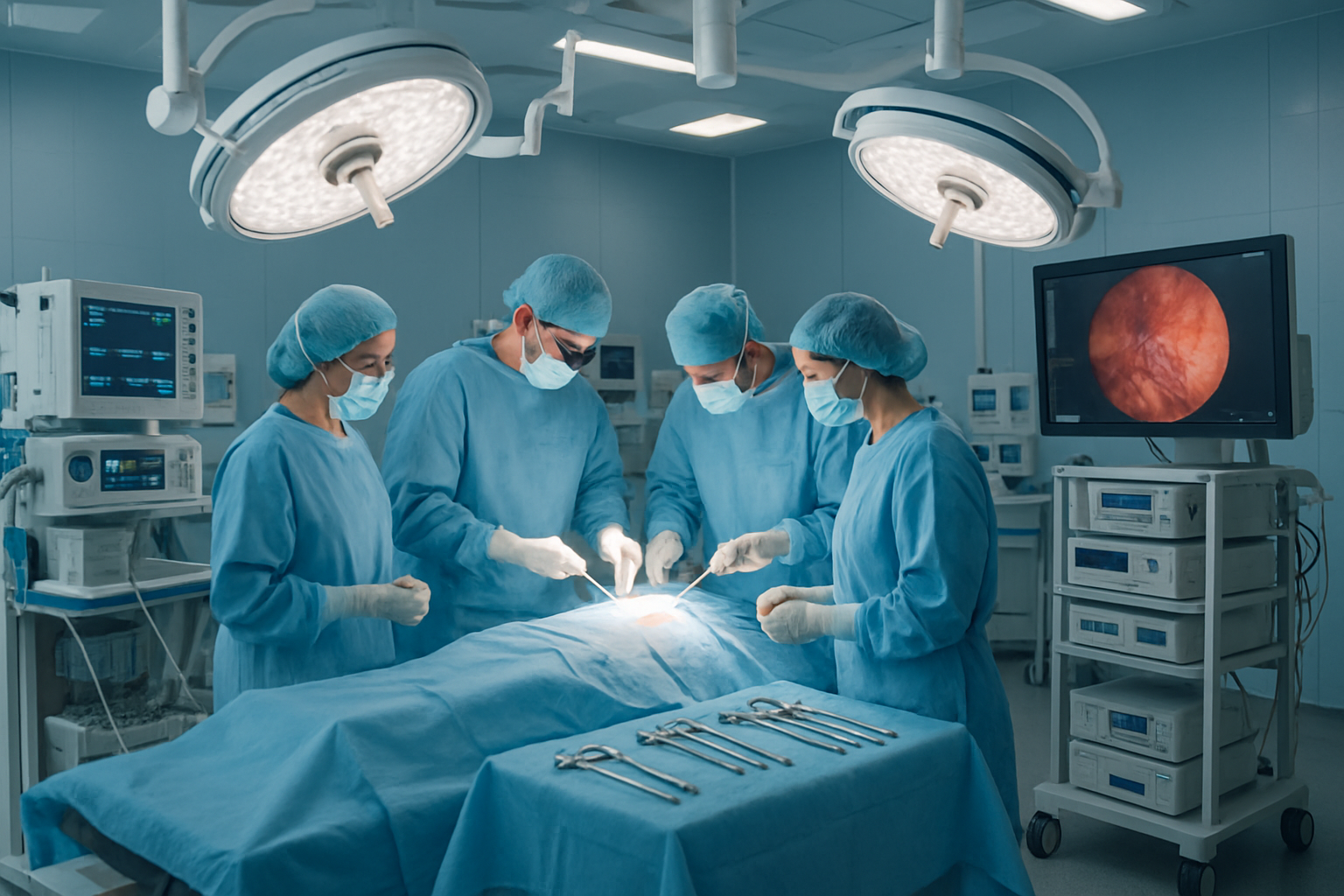
At the same time, the’installation of medical equipment in partner hospitals is carefully planned. High-tech operating theatres equipped with 3D navigation systems, robotic assistants and state-of-the-art endoscopy enhance the quality of surgical procedures, guaranteeing even greater precision. These infrastructures are an integral part of hospital logistics, optimizing not only surgical techniques but also patient flow management.
About medical accommodation, For example, HébergoMed, which specializes in convalescent care, offers accommodation in the immediate vicinity of hospitals. This strategic choice ensures a quiet, secure environment for post-operative recovery. Dedicated services such as MediTransport optimize the management of transport between airport, hospital and accommodation, ensuring that travel stress and fatigue are kept to a minimum by scheduling direct flights and smooth transfers.
Finally, the’logistical assistance This personalized service supports patients in every aspect of their care, from administrative management to the organization of medical appointments. Thanks to fluid communication and exemplary inter-sector coordination, every player in the process - from surgeon to caregiver - stays informed, consolidating an efficient and secure healthcare supply chain. This mobilization of varied skills illustrates the human and technical dimension required to transform a complex operation into an affordable and reassuring experience.
Logistics component
Description
Benefits for the patient
Medical inventory management
Use of RFID and CE/FDA-certified systems
Guaranteed availability of implants, optimal traceability
Medical equipment installation
Surgical suite equipped with 3D and robotic technologies
Greater surgical precision and safety
Medical accommodation
Specialized housing close to hospitals
Safe convalescence and post-operative comfort
Transport of medical equipment and patients
Organization of direct flights and secure transfers
Reduces fatigue and reduces travel stress
Care coordination
Customized logistical support and centralized communication
Smooth workflow, with no unnecessary errors or delays
To find out more about these aspects, it is useful to consult resources dedicated to these practices in France and their impact on international patients, in particular at SOS Medical Tourism or studies on the transformation of medical logistics in hospitals.
Modern techniques and innovative implants: the promise of mobility-preserving surgery
With over 30 years' surgical and industrial experience, Érik Boulard advocates an innovative approach focused on preserving spinal mobility. This paradigm translates into the use of customized dynamic implants, offering an alternative to conventional fusion, often criticized for its rigidity and functional limitations.
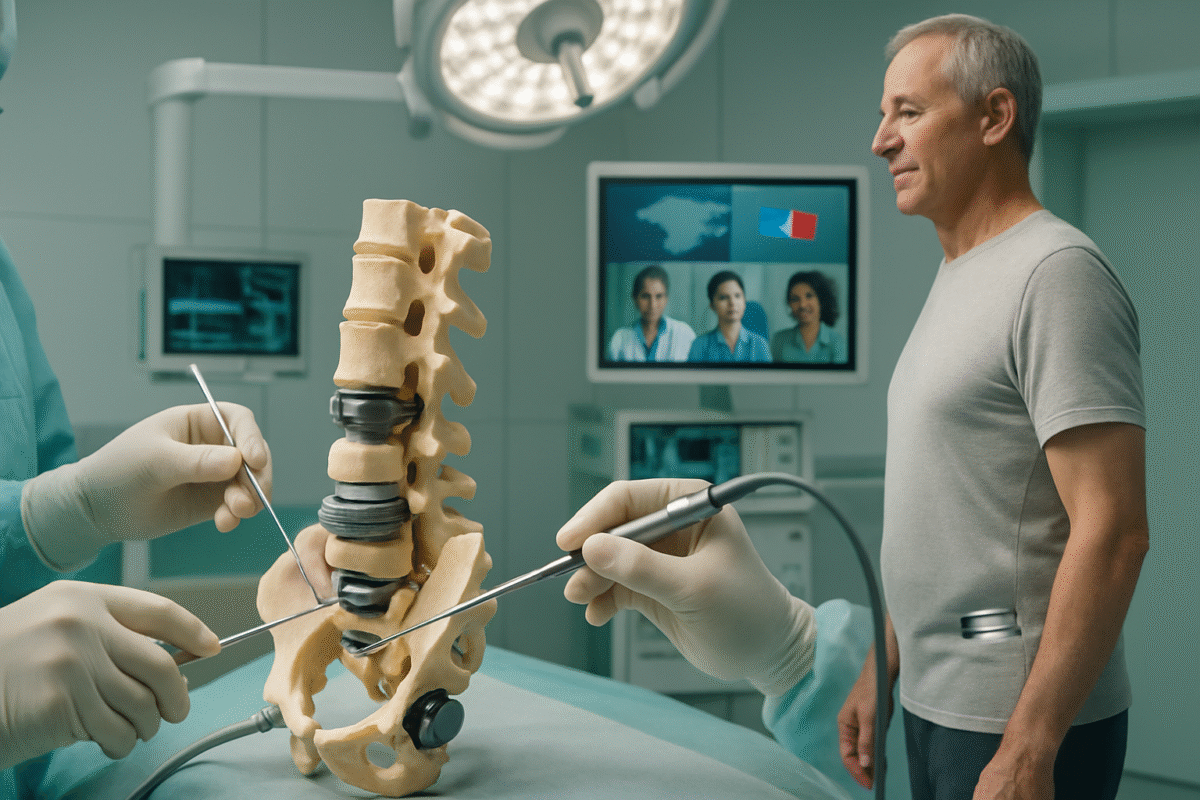
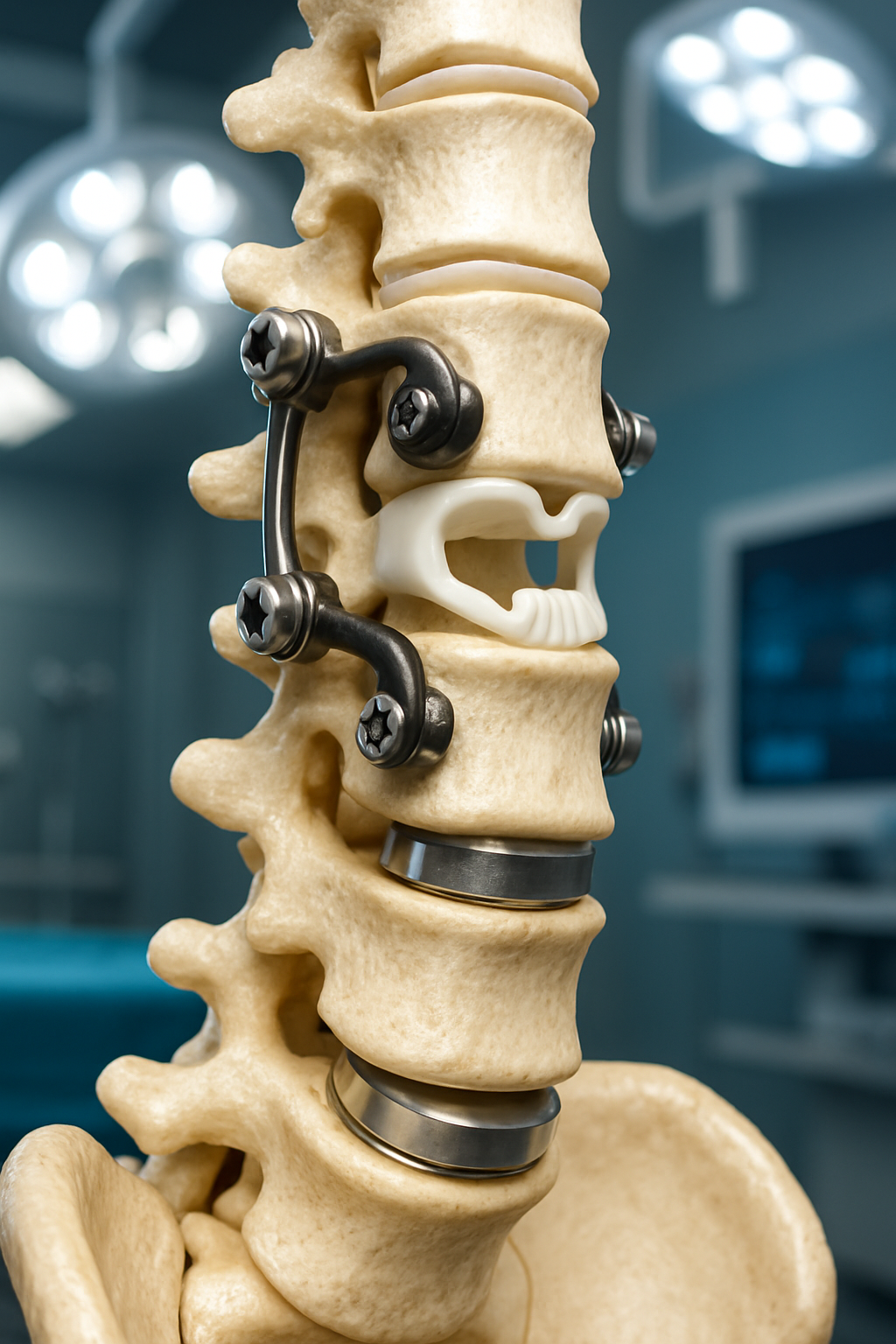
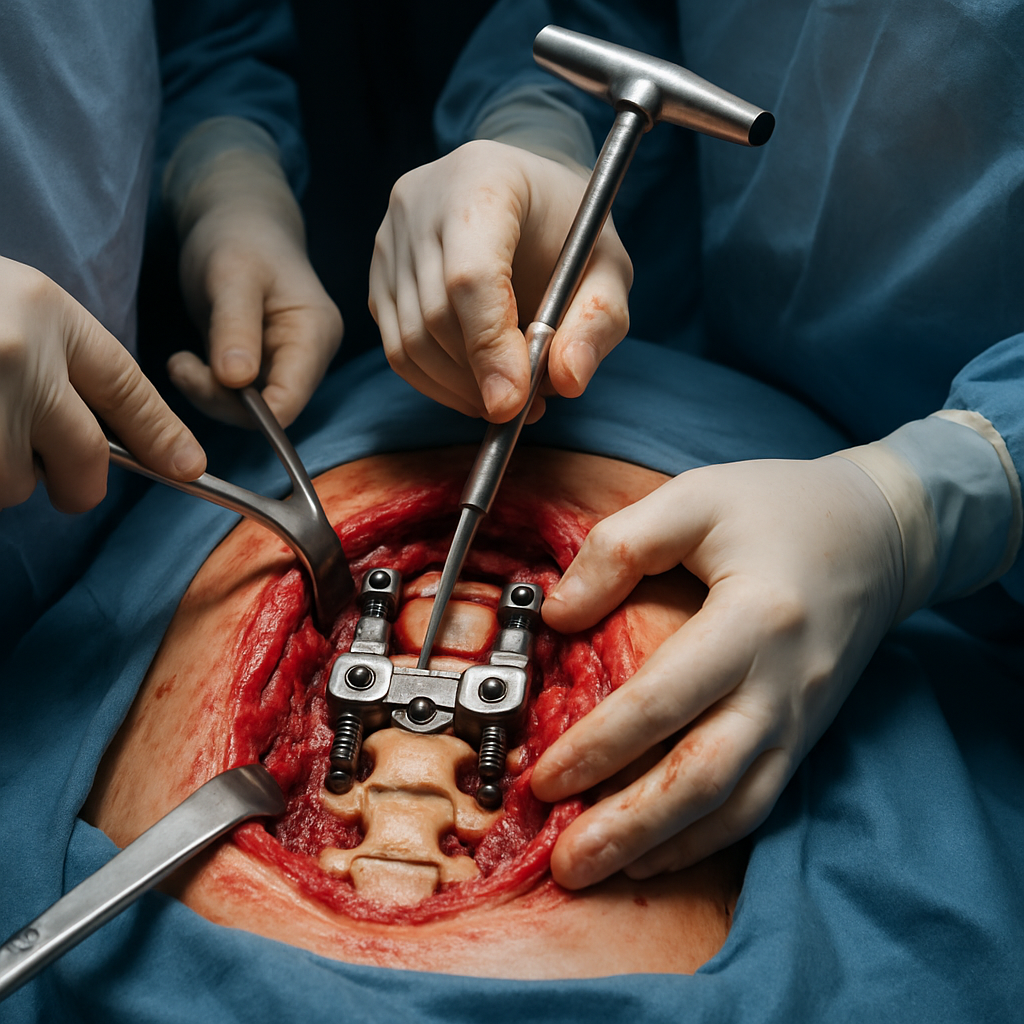
Implants such as the TOPS (Total Posterior Spine) provide multiaxial stabilization to protect the natural mobility of the lumbar spine. Installed to replace an injured vertebra or disc, these devices ensure precise control of painful movements, while reducing adjacent degeneration. This solution is particularly suitable for herniated discs or lumbar instability, where maintaining range of motion is crucial to quality of life.
Alternatives include’Intraspine offers intermediate stabilization via minimally invasive implantation between the vertebral blades. Its ergonomic design favors the natural distribution of biomechanical stresses, limiting pain and speeding recovery. The clinical advantage lies in the reduction of post-operative sequelae and the possibility of a less invasive procedure.
The ESP (Elastic Spine Pad) completes this range, offering flexible cushioning of spinal jerks, ideal for moderate functional instability pathologies. It prevents premature wear while offering superior comfort during critical recovery phases. Finally, the B-DYN adapts stabilization to the patient's specific biomechanics, enabling rapid resumption of daily activities thanks to its durability and adaptability.
These implants are of course rigorously certified (CE, FDA) to ensure their quality, traceability and compliance with the strictest safety standards. Their implantation is integrated into specially adapted surgical protocols, often performed in partner hospitals such as those in Bordeaux, Toulouse and Lyon, which benefit from specialized teams with recognized skills.
Implant
Main function
Clinical benefits
Typical indications
TOPS
Dynamic multi-axis stabilization
Preserved mobility, reduced pain
Herniated discs, lumbar instability
Intraspine
Minimally invasive and flexible stabilization
Less invasive, faster recovery
Radicular syndromes, chronic low back pain
ESP
Soft cushioning and support
Improved comfort, wear prevention
Moderate instability
B-DYN
Adaptive biomechanical management
Increased durability, rapid recovery
Various degenerative diseases
This expertise is deployed through a rigorous selection of implant type based on the initial assessment, carried out for example by Dr Sylvain Desforges at TAGMED, guaranteeing a perfect match between the chosen device and the patient's clinical condition. Ensuring the right choice is at the heart of Érik Boulard's philosophy, which draws on his dual industrial and clinical background to offer truly personalized solutions.
Efficiently coordinate the surgical stay: transport, accommodation and personalized follow-up
Optimal management of an international patient's medical stay in France depends on perfect orchestration of the various logistical services, from initial care to post-surgical follow-up. This coordination relies in particular on collaboration between SOS Tourisme Médical, Franchir and Neurothérapie Montréal, each playing a complementary role.
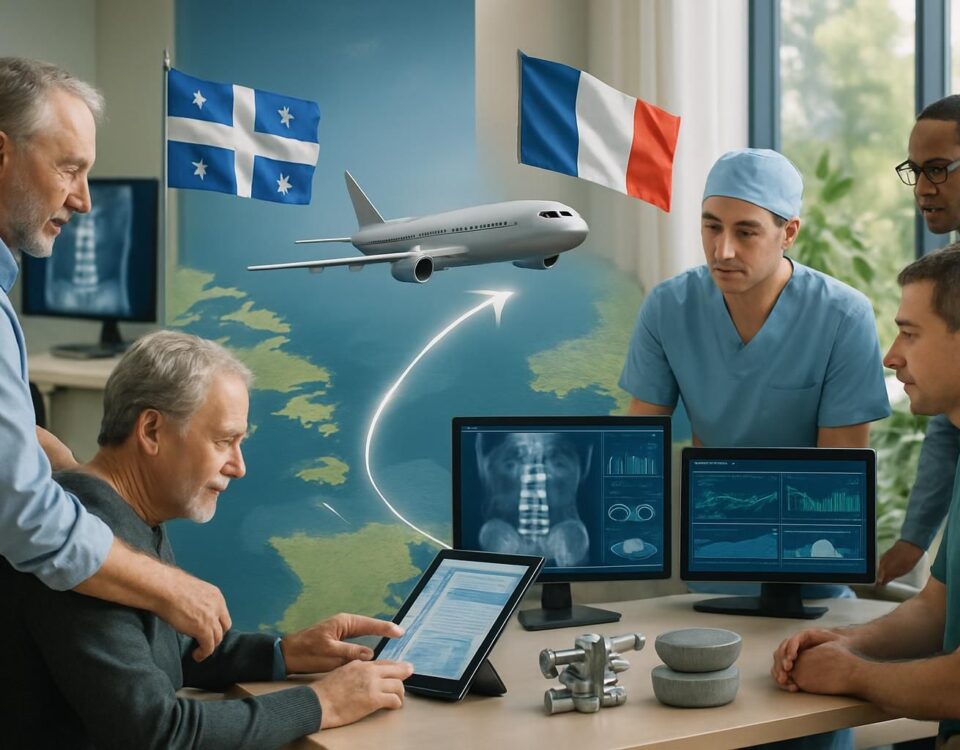
Cross organizes the patient's entire trip, booking direct flights adapted to medical constraints, providing secure transfers via MediTransport between airport, hospital and accommodation, as well as complete administrative management. This approach avoids the need for extra paperwork, secures the patient's journey and allows him or her to concentrate solely on recovery.
L’medical accommodation is entrusted to structures such as HébergoMed, offering accommodation adapted to the specific needs of convalescing patients. Close to our partner hospitals, these accommodations offer a calm, secure environment that complies with health requirements, promoting a comfortable, rapid recovery - an often underestimated factor in the overall success of spinal surgery.
Finally, Neurotherapy Montreal provides personalized follow-up care for patients once they return to Canada, maintaining close links with the French teams and offering ongoing physical and psychological support. This continuity of care and long-term support significantly improves long-term results.
Transport organization: direct flights, secure transfers
Adapted accommodation: comfort and proximity
Administrative assistance: visas, insurance, medical files
Post-op care: support and specialist advice
Fluid communication between Canadian and French teams
Stage of stay
Manager
Service provided
Benefits for the patient
Flight booking
Cross
Organization of suitable direct flights
Comfort and reduced travel fatigue
Accommodation
HébergoMed
Specialized housing nearby
A suitable setting for recovery
Transfers
MediTransport
Safe routes between key locations
Reduced logistical stress
Administrative assistance
AssistanceLogistique
Management of visas, insurance, files
Facilitating complex procedures
Postoperative follow-up
Neurotherapy Montreal
Medical and psychological support
Maintaining the quality of results
As a result, patients benefit from a seamless, perfectly coordinated pathway tailored to their specific needs. For more information on logistics and accommodation, and their impact on surgical choice, consult the resources available at SOS Medical Tourism.
Reference hospitals and their spine surgery experts in France
Successful surgery depends not only on the implant used, but also on the quality of the surgical teams and the excellence of the infrastructure. In France, a number of hospitals stand out for their expertise in spinal surgery, benefiting from the most advanced technologies and internationally recognized competence.
Renowned hospitals such as CHU Bordeaux, CHU Toulouse and the Clinique du Pré in Lyon each have teams performing several hundred operations, with regular use of minimally invasive techniques, dynamic stabilization and innovative arthrodesis. These centers have adopted TOPS, Intraspine or ESP dynamic implants, under the aegis of experienced surgeons chosen mainly by Franchir, according to precise patient indications and profiles.
The rigorous certification of our implants (CE and FDA standards) goes hand in hand with our ability to mobilize 3D imaging technologies and robotic systems during the operation, ensuring precise implantation and a better prognosis. This alliance between human expertise and technological advances is supported by a post-operative follow-up service, whose link with Neurothérapie Montréal guarantees continuity of care when the patient returns to Canada.
Bordeaux University Hospital: endoscopy, lumbar and cervical surgery, dynamic implants
Toulouse University Hospital: minimally invasive arthrodesis, dynamic stabilization
Clinique du Prè Lyon: disc prostheses, surgical robotics
CH Le Mans: minimally invasive techniques, CE and FDA-certified devices
Close collaboration with Franchir for orientation and organization
High-tech operating room and intraoperative imaging
This cutting-edge expertise underlines the importance of choosing the right center, backed by a solid international network. For a personalized and secure referral, Franchir assists patients in selecting the ideal location, guaranteeing high-performance treatment and rapid access to the best teams available.
Optimization and sustainability: how modern hospital logistics meet health challenges
Hospital logistics are no longer limited to the simple management of materials. The growing complexity of care pathways, the unpredictability of needs in times of health crisis, and the demands of sustainability all call for continuous innovation in the organization of hospital flows. At the heart of this evolution, the healthcare supply chain takes on a strategic dimension to guarantee not only the quality but also the sustainability of healthcare resources.
The French partner establishments implement methodical practices based on ISO 13485 and ISO 9001 standards, ensuring impeccable quality management of medical devices used in spinal surgery. This compliance strengthens the confidence of patients and medical professionals alike, by securing supplies and limiting the risks associated with stock-outs or non-compliance. It also enables us to coordinate our continuous improvement approach with the overall patient care plan.
To cope with the unexpected, hospitals are integrating predictive analysis systems and collaborative platforms. These tools increase the agility health resource management by anticipating fluctuations in demand, optimizing the transport of medical equipment, and facilitating inter-sector communication. During the recent health crisis, for example, this logistical approach helped to avoid shortages of critical equipment and ensure a rapid response to urgent care needs.
At the same time, logistics is increasingly moving towards eco-responsible solutions. Ethical management of medical returns and waste, innovative sterilization and recycling of used equipment all contribute to reducing the hospital sector's ecological footprint. Initiatives are being put in place to rationalize flows, better allocate resources and raise staff awareness of environmental issues.
ISO 13485 and ISO 9001 certification
Use of predictive analysis tools for inventory management
Deployment of collaborative platforms for intersectoral coordination
Sustainable practices: sterilization, recycling and ethical waste management
Ongoing training of teams in the use of innovative technologies
Logistics practice
Description
Benefits for hospital and patient
ISO conformity
Quality standards for medical devices and processes
Maximum safety and confidence
Predictive analysis
Software to anticipate hardware needs
Reduced downtime and better planning
Collaborative platforms
Coordination between departments and players
Flow optimization and rapid response
Sustainable management
Waste reduction, equipment recovery
Reduced environmental impact, enhanced safety
Innovative training
Continuous learning on new technologies
Optimal use of medical tools
Excellence in medical logistics combined with a human and sustainable approach is profoundly transforming the spine surgery care offered to international patients. To find out more about these themes and understand their impact on care, visit the page dedicated to the preparation for medical logistics and accommodation.
{« @context »: »https://schema.org »,»@type »: »FAQPage », »mainEntity »:[{« @type »: »Question», »name»: »What are the main bu00e9nu00e9benefits of intu00e9gru00e9e medical logistics for an international patient?», »acceptedAnswer»:{« @type »: »Answer», »text»: »It ensures rapid access0000e8to care, ru00e9reduces waiting du00e9lais, guarantees the disponibilitu00e9of certified implants, limits the risks of error and improves the overall expu00e9experience gru00e2ce u00e0 a coordinated management of transport and hu00e9accommodation.»}},{« @type »: »Question», »name»: »How does RFID technology improve mu00e9medical inventory management?», »acceptedAnswer»:{« @type »: »Answer», »text»: »RFID enables real-time trau00e7abilit00e9 of implants and matu00e9riels, avoiding stock-outs and errors, ensuring better su00eability and optimal device management for each intervention.»}},{« @type »: »Question», »name»: »Which innovative implants are proposed in France for spine surgery?», »acceptedAnswer»:{« @type »: »Answer», »text»: »Dynamic implants such as TOPS, Intraspine, ESP and B-DYN are available, guaranteeing stabilization with pru00e9servation of mobilitu00e9, adaptu00e9s to various spinal pathologies.»}},{« @type »: »Question», »name»: »Who organizes the logistical aspects of mu00e9dical su00e in France?», »acceptedAnswer»:{« @type »: »Answer», »text»: »La sociu00e9tu00e9 Franchir takes charge of lu2019organisation des vols, transferts, hu00e9bergement et aspects administratifs, assurant ainsi un voyage su00ecurisu00e9 et fluide pour les patients.»}},{« @type »: »Question», »name»: »How is post-opu00e9operative follow-up ensured after return to Canada?», »acceptedAnswer»:{« @type »: »Answer», »text»: »It is provided0000e9 by Neurothu00e9rapie Montru00e9al, which accompanies patients in their ru00e9tablissement, offers personalized support and maintains communication with the French surgical u00e9quipes.»}}]}
What are the main benefits of integrated medical logistics for international patients?
It ensures rapid access to care, reduces waiting times, guarantees the availability of certified implants, limits the risk of errors and improves the overall experience thanks to coordinated management of transport and accommodation.
How does RFID technology improve medical inventory management?
RFID enables real-time traceability of implants and materials, avoiding stock-outs and errors, ensuring greater safety and optimal management of devices for each procedure.
What innovative implants are available in France for spinal surgery?
Dynamic implants such as TOPS, Intraspine, ESP and B-DYN are available, guaranteeing stabilization while preserving mobility, adapted to different spinal pathologies.
Who organizes the logistics of your medical stay in France?
Franchir takes charge of organizing flights, transfers, accommodation and administrative aspects, ensuring a safe and smooth journey for patients.
What is the post-operative follow-up after returning to Canada?
It is provided by Neurothérapie Montréal, which accompanies patients in their recovery, offers personalized support and maintains communication with the French surgical teams.
A spine specialist for over 30 years, Érik Boulard founded France Rachis, France's leading distributor of innovative spine implants. With the unique experience of over 3,000 operating room surgeries and a vast network of surgeons and elite hospitals in France and Europe, he now accompanies Quebec and Canadian patients via SOS Tourisme Médical, Franchir and Neurothérapie Montréal. His commitment: to offer fast, personalized access to the best spine techniques and teams, to preserve patients' mobility and quality of life.



Intégration de la rTMS après chirurgie expliqué aux patients québécois
Learn more