La hernie discale est une affection courante qui impacte la mobilité et la qualité de vie des patients. Face à l'inefficacité des traitements conservateurs, la chirurgie, notamment grâce aux avancées en microchirurgie et techniques endoscopiques, offre des solutions innovantes. En France, des experts comme le Dr Sylvain Desforges collaborent avec des équipes canadiennes pour fournir des soins personnalisés et sécurisés, garantissant un parcours de soins complet et efficace.
Top 5 Tips to Remember
Herniated discs can cause back and neck pain, sometimes requiring surgery.
Les traitements conservateurs sont souvent efficaces, mais l'opération est envisagée en cas d'échec.
Des techniques chirurgicales modernes comme la microchirurgie et l'endoscopie réduisent le temps de récupération.
Un suivi post-opératoire rigoureux est essentiel pour une réhabilitation réussie.
Le parcours patient est optimisé grâce à une collaboration entre experts canadiens et français.
Herniated discs are a frequent source of suffering, affecting both mobility and quality of life. Faced with the ineffectiveness of conservative treatments, back surgery, thanks in particular to advances in microsurgery and endoscopic techniques, offers revolutionary solutions. These procedures, performed in France with a high level of expertise, benefit from a solid transatlantic collaboration with Canada, giving Quebec patients access to innovative, personalized and safe care. This international dialogue ensures a complete care pathway, from initial assessment to post-operative follow-up, with a network of experts such as the Dr. Sylvain Desforges and its team at TAGMED, Neurothérapie Montréal for post-operative support, not forgetting the Franchir company, which organizes every stage of the medical stay in France. In 2025 herniated disc is being transformed, reconciling efficiency, speed of recovery and maintenance of mobility, thanks in particular to specific implant systems and innovative techniques integrated into the arsenal of Innovative Neurosurgery and Advanced Orthopedics.
Understanding herniated discs: causes, symptoms and spinal surgery issues
A herniated disc occurs when part of the intervertebral disc, which normally acts as a cushion between the vertebrae, is displaced from its natural position and compresses the surrounding nerves. This pressure causes intense pain, often localized in the lumbar or cervical region, In some cases, this may be accompanied by neurological symptoms such as numbness, tingling or muscle weakness. While the majority of herniated discs can evolve favorably with conservative treatment, some persistent pain or worsening symptoms require surgical intervention.
From a modern spinal surgery perspective, it is essential to understand the mechanisms behind herniated discs in order to adapt treatments. Pressure exerted by repetitive activities, poor posture, or aging of the disc can cause a fissure in the annulus fibrosus, allowing the nucleus pulposus to migrate. Although herniation can affect different areas of the spine, the lumbar (especially L4-L5, L5-S1) and cervical regions are most affected. Each site is associated with specific pains, such as sciatica or cervicobrachialgia, requiring appropriate follow-up.
The role of’patient assessment and records is therefore crucial and is provided for Canadian patients by the Dr Sylvain Desforges and his team at TAGMED clinics in Montreal and Terrebonne. Their experience in supervising specialized conservative treatments such as neurovertebral decompression robotic treatment is part of a rigorous, personalized approach that excludes any official diagnostic or physiotherapy practices.
Common symptoms: back pain radiating into the legs, numbness, muscle weakness, neck pain radiating into the arms.
Possible complications: ponytail syndrome, paralysis, loss of feeling.
Region affected
Associated symptoms
Potential impact
Lumbar (L4-L5, L5-S1)
Sciatica, pain radiating down the leg
Functional discomfort, disabling pain
Cervical
Cervicobrachialgia, arm pain
Muscle weakness, sensory disturbances
These elements define the urgency and nature of possible surgical interventions, placing patients at the heart of integrated management adapted to innovative technologies.
The transatlantic patient journey for back surgery in France
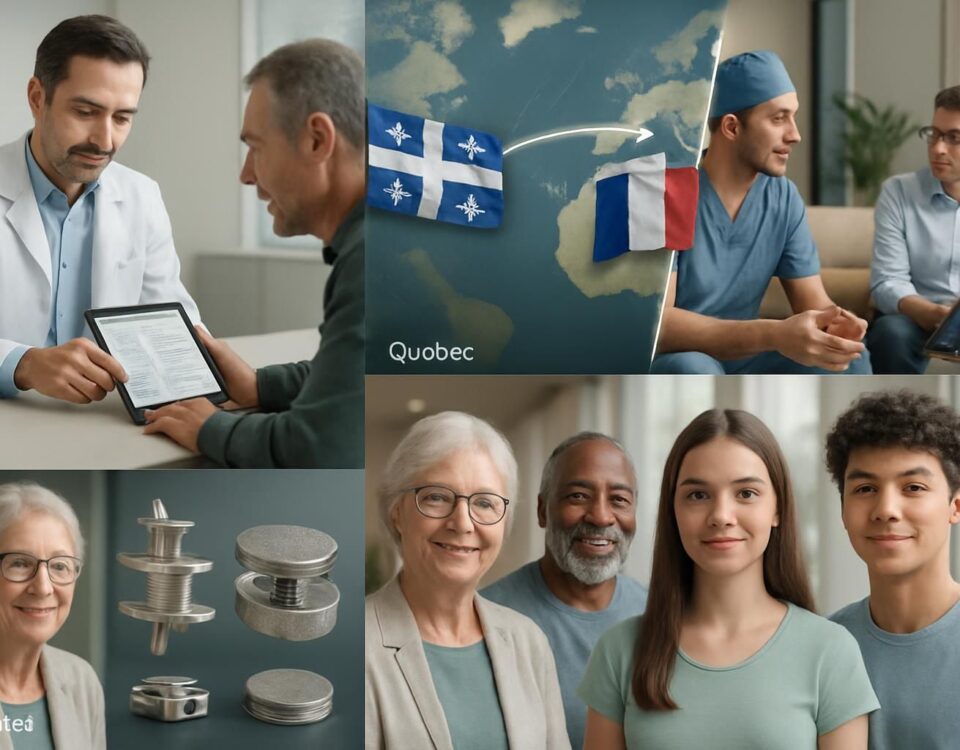
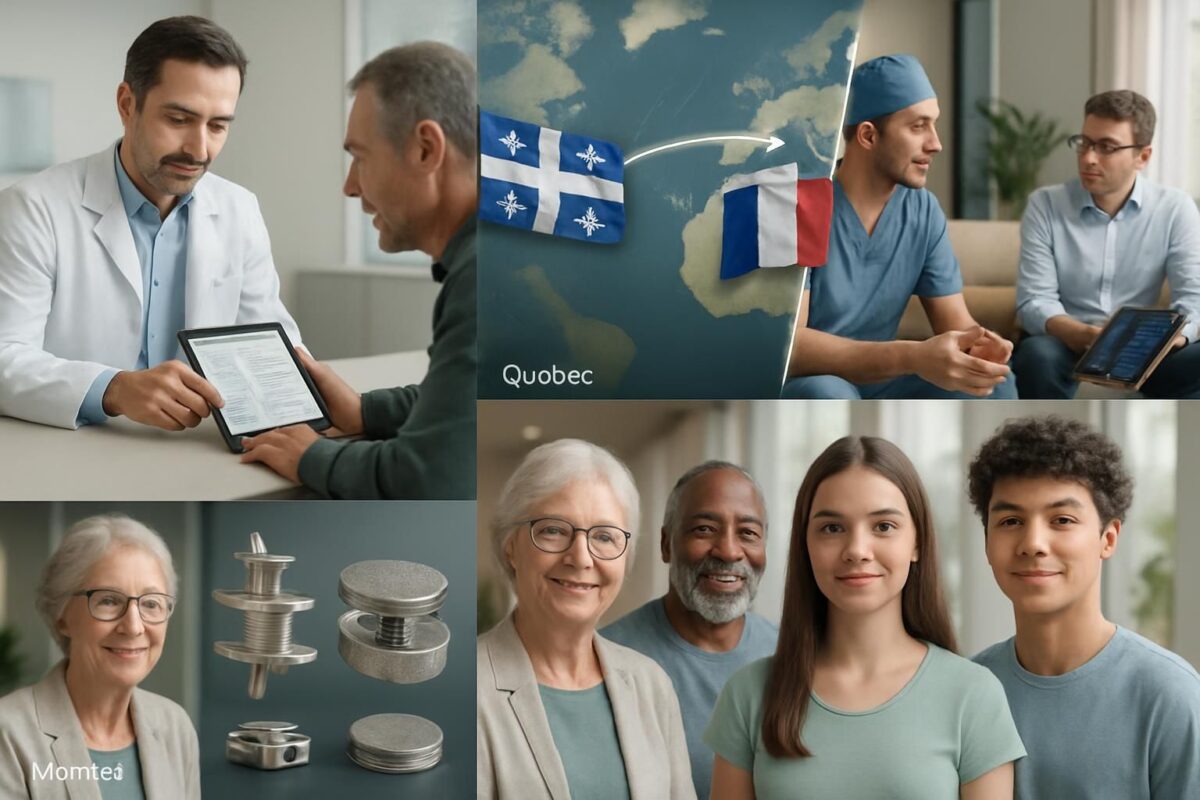
Visit Canadian patients with herniated discs now benefit from a structured and secure pathway to state-of-the-art spinal surgery in France. This process is organized around several key players providing follow-up from start to finish.
Dr. Sylvain Desforges and his team at TAGMED perform comprehensive patient assessments and supervise the treatment of neurovertebral decompression critical before considering surgery. This expert conservative follow-up prepares the patient for an eventual transition to surgery if symptoms persist, to the exclusion of any physiotherapy or formal diagnosis.
The company Cross plays a key role in directing you to the most appropriate French surgeon, depending on the type of hernia and the preferred surgical technique. It also takes care of the complete organization of the medical stay, including travel and accommodation, to guarantee a serene and optimized stay.
After the operation, post-operative care is provided by Neurotherapy Montreal, which supports patients at every stage of their recovery in Canada. This personalized service is an essential pillar for effective rehabilitation and a return to everyday life.
Finally, SOS Medical Tourism is responsible for informing patients about the different surgical techniques available, the eligibility criteria and the administrative procedures involved, ensuring optimum understanding and informed decision-making.
Initial assessment and conservative treatment by Dr Sylvain Desforges and TAGMED
Orientation and organization of your stay in France by Franchir
Robotic neurovertebral decompression, case follow-up
Orientation and organization of your stay
Cross
Choosing a surgeon, booking travel and accommodation
Postoperative follow-up
Neurotherapy Montreal
Personalized support on returning to Canada
Information and procedures
SOS Medical Tourism
Information on techniques and administrative procedures
This coordinated network combines medical expertise and optimized organization to provide Canadian patients with efficient and secure access to the best solutions in the field. back surgery.
Innovative surgical techniques in the treatment of herniated discs in France
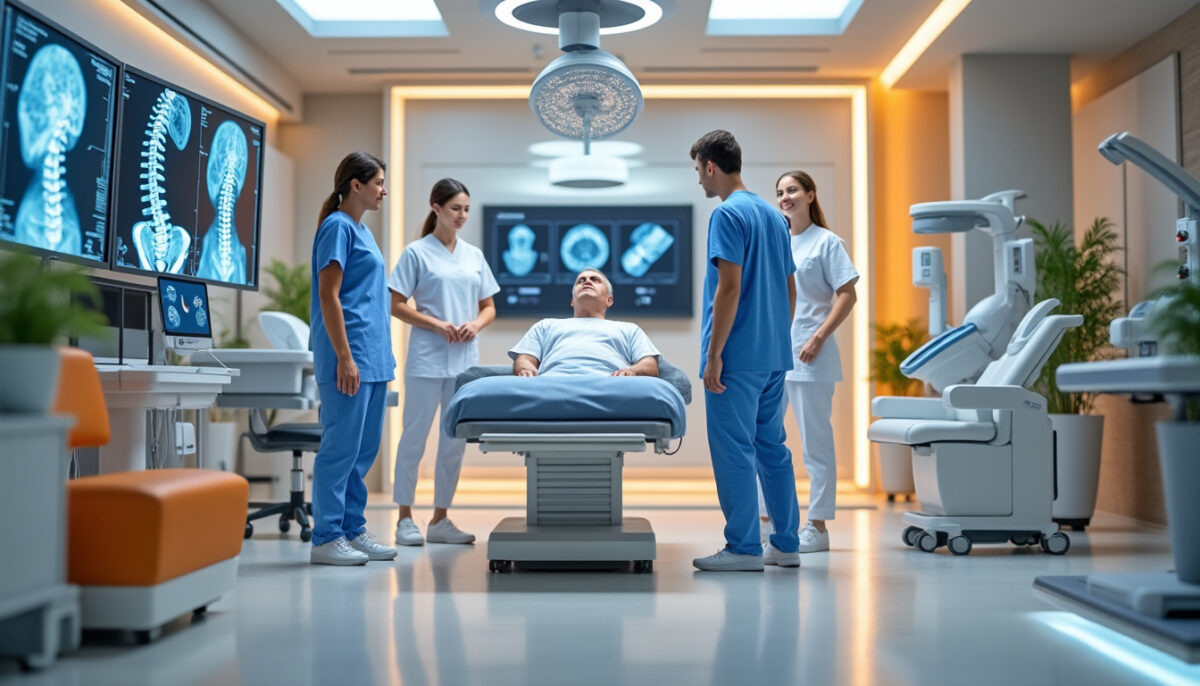
Surgery on the herniated disc has evolved considerably in recent years, thanks to the emergence of less invasive, more effective techniques designed to reduce recovery times and preserve patient mobility.
Here is an overview of the main methods available:
Microsurgery This technique uses a small incision to remove the herniated part of the disc with minimal impact on the surrounding muscles and ligaments.
Endoscopic surgery Using an endoscope, the surgeon accesses the hernia through a very fine incision, further reducing post-operative pain and hospitalization time.
Arthrodesis (spinal fusion) : Used in cases of recurrence or major disc damage, this technique involves fusing two vertebrae to stabilize the spinal column.
Dynamic stabilization (e.g. TOPS, Intraspine) These flexible implants limit movements The aim is to avoid excessive wear and tear, while retaining a certain degree of mobility to avoid the complications associated with fusion.
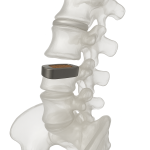
Disc prosthesis Replacing the damaged disc with an artificial prosthesis to maintain normal mobility of the vertebral segment.
Technical
Main indications
Benefits
Patient benefits
Microsurgery
Simple disc herniations without instability
Reduced incision, rapid recovery
Fast relief, little post-operative pain
Endoscopic surgery
Endoscopically accessible disc herniations
Less invasive, less hospitalization
Back to activities
Arthrodesis
Recurrences, vertebral instability
Safe column stabilization
Limits the risk of nervous distress
Dynamic stabilization
Active patients who want to remain mobile
Maintains flexibility
Better quality of life, less chronic pain
Disc prosthesis
Damaged discs without severe instability
Mobilité préservée, alternative à l’Arthrodèse
Significant improvement in spinal function
Examples of implants and technologies present in France include brands such as Cousin Spine, Premia Spine and DiscTec, major players in innovative solutions for spinal surgery. They contribute to optimized results in terms of both function and quality.
Post-operative follow-up and spinal rehabilitation: personalized support
The success of herniated disc surgery depends not only on the operation itself, but also on rigorous post-operative follow-up and appropriate rehabilitation. This process is crucial to achieving optimal and lasting recovery.
Psychological and motivational support, crucial for rehabilitation
This care is part of the continuity of the program set up in France during hospitalization, creating a strong link between the two continents. Thanks to this coordination, patients can return home to Canada under the best possible conditions.
Phase
Key actions
Patient objectives
Immediate (0-2 weeks)
Pain control, gentle mobilization
Reduce pain, prevent complications
Intermediate (2-6 weeks)
Light muscle strengthening, activity adaptation
Gradual resumption of movements
Advanced (6 weeks or more)
Complete functional rehabilitation
Return to normal activities and sports
Patients are informed by SOS Medical Tourism on the importance of this follow-up and the different stages, enabling them to become actively involved in their healing process.
Frequently asked questions about herniated disc surgery and the procedure in France for Quebec patients
How long does herniated disc surgery last? The procedure generally lasts between 45 minutes and 2 hours, depending on the technique chosen and the complexity of the case.
When can I resume my activities after the operation? Resumption is often possible after 4 to 6 weeks, with a gradual increase in activity according to medical recommendations.
What are the risks of surgery? Risks include infection, hematoma and nerve damage, although these are rare. Persistent pain may also occur temporarily.
Is surgery always necessary? No, it is only envisaged after the failure of the treatments or in the event of serious symptoms requiring urgent intervention.
What's the difference between microsurgery and endoscopic surgery? Microsurgery uses a incision small but larger than that of endoscopic surgery, which is the least invasive with a shorter recovery time.
For further information, we recommend that patients consult reliable resources such as Femme Actuelle or Anodyne France, to give a better understanding of the issues involved.
Dr. Sylvain Desforges is the founder of SOS Tourisme Médical. With over 35 years of expertise in evaluating spinal disorders and supporting patients with chronic spinal conditions, Dr. Sylvain Desforges has established himself as a leading authority for Canadians seeking access to innovative back and neck surgery in France. Renowned for his clinical rigor and teaching skills, he performs in-depth evaluations and supervises conservative treatments—particularly non-surgical spinal decompression therapy—at TAGMED, prior to any surgical procedure. Through SOS Tourisme Médical, he coordinates a network of complementary partners:Neurothérapie Montréal, for specialized preoperative examinations and postoperative follow-up (neuromtl.com), Franchir, for referrals to the best spine centers and surgeons in France, as well as complete logistical organization of the stay (franchir.eu),and TAGMED for initial assessment and conservative treatments (cliniquetagmed.com). Every day, he is committed to informing, guiding, and supporting patients at every stage: understanding techniques and implants (TOPS™, Intraspine®, disc prostheses, etc.), explaining eligibility criteria, administrative procedures, practical organization, and follow-up until their return to Quebec. Its goal: to guarantee a fast, personalized, and transparent care pathway, in complete safety, to enable everyone to regain mobility and quality of life thanks to advances in spinal surgery. For more information or for a personalized assessment, discover the pathway offered by SOS Tourisme Médical or contact us directly via the online form.



Testimonials from convalescent patients: indications, benefits and limitations
Learn more